
Level
Posts written by Level.

What Is an SLA?
This blog explains what an SLA is, how service level agreements work, and why they matter for IT teams and MSPs. It also explores SLA metrics, examples, best practices, and how Level supports stronger SLA performance through visibility, automation, and endpoint management.
IT Management
Backup Shadow Copies Explained: How VSS Works, What It Protects, and Why It Isn't a Backup
Backup shadow copies help Windows capture consistent snapshots of active data without interrupting users or applications. Learn how Volume Shadow Copy Service (VSS) works, the difference between snapshots and backups, common recovery scenarios, and why shadow copies should be part of a broader backup strategy.
IT Management
The State of Modern IT Operations
Modern IT operations are evolving rapidly as organizations manage more endpoints, cloud services, and security responsibilities than ever before. Learn the trends shaping today's IT teams and why proactive operations have become essential.
IT Management
What Makes a Healthy Endpoint?
A healthy endpoint is more than a device that is online. Learn how visibility, secure configuration, patching, vulnerability management, functioning security controls, and recovery readiness contribute to overall endpoint health.
IT Management
Major Vendor Outages This Month and How MSPs Can Prepare (July 2026)
July 2026 brought significant outages across AWS, Microsoft Azure, Google Cloud, and Cloudflare. Learn what caused these incidents, why they matter to MSPs, and how to build a stronger strategy for monitoring, business continuity, and vendor risk management.
General
How Often Does File History Run?
How often does Windows File History run? Learn the default backup schedule, how File History creates versioned backups, how backup retention works, and where File History fits into a modern IT operations strategy.
IT Management
The True Cost of Waiting Until Users Report Problems
Waiting for users to report IT issues may seem practical, but it often delays detection and increases business disruption. Learn how proactive monitoring helps IT teams identify problems earlier, improve operational visibility, and reduce downtime.
IT Management
Why IT Standardization Matters
IT standardization creates consistency across configurations, processes, and security controls, making IT environments easier to secure, manage, and automate. Learn why standardized operations are a foundational step toward higher IT operations maturity and more efficient endpoint management.
IT Management
What Is Operational Excellence in IT?
Operational excellence in IT goes beyond keeping systems online. Learn how governance, service management, security, resilience, performance measurement, and continual improvement help organizations build reliable IT operations and advance through the IT Operations Maturity Model.
IT Management
What Are Managed IT Services?
Managed IT services provide ongoing technology support, monitoring, maintenance, and management through a third-party provider. This guide explains how managed IT services work, their benefits, common service types, and when businesses should use them.
IT Management
What Is Endpoint Security?
Endpoint security protects laptops, desktops, servers, mobile devices, and other network-connected endpoints from cyber threats. It combines protection, monitoring, patching, access controls, and response capabilities to improve cybersecurity and reduce risk.
Security
What Is Incident Management?
Incident management helps IT teams restore services quickly, minimize downtime, and continually improve operations. Learn the incident management lifecycle, best practices, key metrics, and how frameworks like ISO, NIST, CISA, and FIRST guide effective IT operations.
IT Management
Why IT Complexity Keeps Increasing
Modern IT environments are more complex than ever, driven by hybrid work, cloud adoption, endpoint growth, and expanding cybersecurity responsibilities. Discover what's causing the complexity and how IT teams can better manage it.
IT Management
The Biggest Challenges Facing Modern IT Teams
IT teams are managing more devices, cloud services, security responsibilities, and user expectations than ever before. Learn the biggest challenges shaping modern IT operations and how proactive strategies help organizations stay ahead.
IT Management
Retail IT Infrastructure Management: Best Practices for Reliable, Secure Retail Operations
Retail IT infrastructure powers everything from POS systems and store networks to inventory management and payment processing. Learn the best practices and industry frameworks that help retailers build secure, resilient, and scalable technology environments.
IT Management
Common Causes of IT Downtime
Downtime affects productivity, customer experience, and business continuity. Discover the most common causes of IT downtime and how proactive monitoring, automation, and endpoint visibility can help prevent outages.
IT Management
The Biggest IT Conferences This Quarter and What MSPs Should Watch
Q3 2026 brings major conferences focused on managed services, cybersecurity, AI, and hybrid infrastructure. Discover which events matter most for MSPs and how their themes align with trusted guidance from NIST, CISA, and ENISA.
General
What Recent Ransomware Campaigns Teach MSPs About Supply Chain Security
Recent ransomware campaigns have shown that attackers increasingly target trusted software and service providers to reach multiple organizations. Learn the biggest supply chain security lessons for MSPs and how stronger vendor governance, patch management, and RMM practices can help reduce risk.
Security
The Top IT Trends That Emerged This Month: June 2026
June 2026 brought significant developments across cybersecurity, AI, and enterprise IT. From CISA's shift toward risk-based patching to growing attention on agentic AI and post-quantum cryptography, here's what IT teams and MSPs need to know and how these trends could shape IT operations moving forward.
General
What Is Technical Debt in IT Operations?
Technical debt in IT operations extends beyond outdated code. Learn how legacy infrastructure, manual processes, deferred maintenance, and aging systems increase operational risk, along with practical strategies for measuring and managing technical debt.
IT Management
Early Warning Signs Your IT Environment Is Becoming Unmanageable
IT environments rarely become unmanageable all at once. Learn the early warning signs of growing IT complexity and discover practical ways to improve visibility, consistency, and operational resilience before small issues become larger challenges.
IT Management
What Is IT Asset Management? A Complete Guide to ITAM
IT Asset Management helps organizations track hardware, software, cloud resources, and other technology assets throughout their lifecycle. Learn how ITAM improves visibility, strengthens cybersecurity, supports compliance, and enables better technology decisions.
IT Management
Capacity Planning for IT Teams: Best Practices for Building a Scalable IT Organization
Capacity planning helps IT teams ensure they have the right people, skills, infrastructure, and resources to support current operations and future business growth. This guide explains the capacity planning process, best practices, and governance frameworks that help organizations build scalable and efficient IT operations.
IT Management
IT Operating Model Explained: Components, Benefits, and Best Practices
An IT operating model defines how an organization's people, processes, governance, and technology work together to deliver effective IT services. Learn the core components, common operating models, benefits, and best practices for building a modern IT organization.
General
Standardization vs. Flexibility in IT: How to Balance Consistency and Adaptability
Should IT environments prioritize strict standards or allow teams more flexibility? Learn how guidance from NIST, ISO, OECD, CISA, and government organizations recommends creating standardized foundations while preserving the adaptability needed to support changing business and technology requirements.
IT Management
How to Troubleshoot Network Connectivity Problems
Network connectivity problems can result from Wi-Fi issues, DNS failures, DHCP errors, packet loss, VPN misconfigurations, driver problems, firewall rules, or service outages. A structured troubleshooting process helps isolate the cause quickly and restore reliable access.
Networking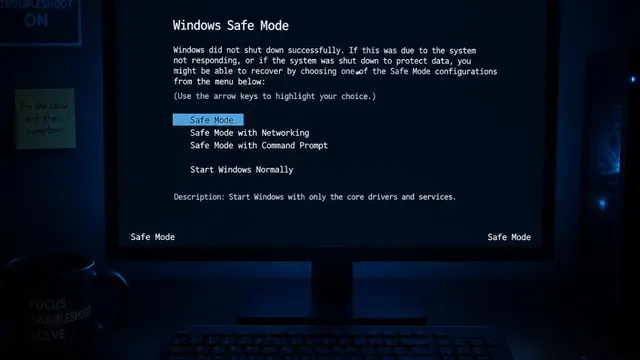
Windows Safe Mode Explained
Windows Safe Mode is a diagnostic startup mode that loads only essential drivers and services. It helps users and IT teams identify driver conflicts, startup problems, software issues, malware symptoms, and hardware-related instability.
General
How to Troubleshoot Device Driver Issues
Device driver issues can cause crashes, missing hardware, performance problems, and connectivity failures. Effective troubleshooting involves identifying the affected device, reviewing recent changes, checking Device Manager, validating hardware health, and using trusted driver sources.
General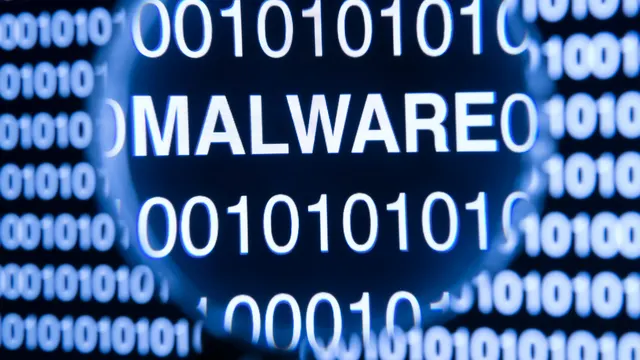
What Is Malware? Types, How It Spreads, and How to Protect Your Devices
Malware is one of the most common cybersecurity threats facing businesses today. Learn what malware is, how it spreads, the different types of malware, and the security best practices that help prevent infections and strengthen cyber resilience.
Security
Microsoft Copilot Security Risks MSPs Should Know Before Enabling It
Microsoft 365 Copilot is becoming a major security discussion as AI gains access to organizational data, permissions, and business workflows. This guide explains the risks, governance requirements, and security best practices MSPs should understand before deploying Copilot for clients.
Security
What Is Change Management in IT?
Change management in IT is the structured process of planning, approving, implementing, and documenting changes to IT systems and services. It helps teams reduce downtime, improve security, and make changes with better control.
General
June 2026 Patch Tuesday: Why MSPs Need a Faster Patch Management Process
June 2026 Patch Tuesday was one of Microsoft's largest security update releases in recent years, creating a significant patching workload for IT teams and MSPs. This guide explains what happened, why it matters, and how MSPs can improve patch deployment and compliance reporting.
Security
MSP Supply Chain Security: Why Third-Party Risk Is Now a Core MSP Cybersecurity Concern
MSPs increasingly rely on vendors, tools, and integrations that can introduce cybersecurity risk. This blog explains why supply chain security matters, how vendor risk assessments work, and what MSPs should consider when evaluating RMM security.
Security
What Is Endpoint Monitoring?
This blog explains what endpoint monitoring is, how it works, and why it matters for modern IT operations. It explores monitoring benefits, use cases, challenges, and how Level supports proactive endpoint visibility, automation, patching, and remote support.
IT Management
What Is Remote Monitoring?
This blog explains what remote monitoring is, how it works, and why it matters for modern IT operations. It explores remote monitoring benefits, challenges, use cases, and how Level supports proactive visibility, automation, remote support, and device management.
IT Management
Common Windows Startup Problems
Windows startup problems can result from failed updates, driver conflicts, corrupted system files, storage failures, malware, and hardware issues. Understanding the most common causes helps IT teams troubleshoot more effectively and reduce downtime.
IT Management
SNMP Ping Explained
SNMP ping verifies whether a device can respond to SNMP management requests, not just whether it is online. Learn how it works, how it differs from traditional ping, and why it is an important part of network monitoring.
Networking
What Is Server Monitoring?
This blog explains what server monitoring is, how it works, and why it matters for modern IT operations. It explores monitoring metrics, use cases, challenges, and how Level supports proactive server management through visibility, automation, patching, and remote support.
IT Management
What Is Phishing?
Phishing is a social engineering attack that tricks people into sharing sensitive information, clicking malicious links, downloading malware, or sending money. Understanding how phishing works helps users and IT teams reduce risk, detect threats earlier, and respond faster.
Security
What Causes Blue Screen Errors?
Blue screen errors happen when Windows encounters a critical condition it cannot safely recover from. The most common causes include driver failures, hardware problems, memory errors, corrupted system files, failed updates, overheating, malware, and incompatible software.
General
Help Desk vs Service Desk
A help desk focuses on technical issue resolution, while a service desk provides broader IT service management capabilities. This guide explains the key differences, benefits, and use cases for each approach.
Networking
Managed IT Services for Retail
Managed IT services help retailers keep POS systems, networks, devices, and inventory platforms running securely and reliably. Learn how proactive IT support reduces downtime, improves cybersecurity, and helps retail businesses scale more efficiently.
MSP
What Is Network Monitoring?
Network monitoring tracks network health, availability, performance, and infrastructure status. It helps IT teams detect outages, troubleshoot faster, and maintain reliable operations across distributed environments.
Networking
Common Patch Failure Causes
Patch failures can occur during download, installation, reboot, or validation stages. Understanding the most common causes helps IT teams improve patch success rates, reduce security risk, and troubleshoot update issues more effectively.
IT Management
Reactive vs Proactive IT Support
Reactive IT support fixes issues after they occur, while proactive IT support uses monitoring, maintenance, automation, and trend analysis to identify problems earlier. Most organizations benefit from combining both approaches to improve reliability and reduce avoidable disruptions.
General
DNS vs DHCP Explained
DNS translates domain names into IP addresses, while DHCP automatically assigns network settings to devices. Together they support reliable connectivity and network communication.
Networking
Hardware Asset Management vs IT Asset Management
Hardware asset management focuses on physical devices, while IT asset management covers the wider technology ecosystem including software, subscriptions, and contracts. Understanding the distinction helps organizations improve visibility and governance.
IT Management
What Is Device Lifecycle Management?
Device lifecycle management helps organizations manage devices from procurement through retirement. It improves visibility, reduces downtime, strengthens security, and supports better IT planning.
IT Management
Windows 10 Migration: Why Organizations Still Need a Clear Upgrade Plan
Many organizations are still running Windows 10 after end of support, often while planning hardware refreshes and Windows 11 migrations. This guide explains how IT teams and MSPs can assess readiness, manage unsupported devices, and build a structured migration strategy.
General
What Is VPN and How Does It Work?
A VPN creates a protected tunnel that helps secure data in transit and enables remote access to private networks. Businesses use VPNs for remote work, internal system access, and network-to-network connectivity.
Networking
What Is Latency?
Latency is the delay between a request and a response, usually measured in milliseconds. It affects network responsiveness, remote access, cloud applications, and user experience.
Networking
Help Desk and RMM Workflow Automation: How MSPs Improve Efficiency and Scalability
Learn how MSPs can use help desk and RMM workflow automation to improve efficiency, strengthen security, and scale IT operations more effectively. This guide covers automation workflows, flexible MSP stacks, operational best practices, and scalable service delivery strategies.
Automations
What Is Remote Device Monitoring?
Remote device monitoring allows IT teams to monitor device health, availability, and performance remotely. It improves visibility, troubleshooting, and operational efficiency across distributed environments.
IT Management
What Is Network Discovery?
Network discovery identifies and maps devices and services connected to a network. It helps IT teams improve visibility, documentation, and infrastructure awareness.
Networking
Backup Monitoring for MSPs
Backup monitoring helps MSPs detect failures early and maintain reliable disaster recovery readiness. Learn how proactive backup visibility improves data protection and client trust.
MSP
What Is Network Visibility?
Network visibility provides insight into devices, traffic, infrastructure, and network activity. It helps organizations improve awareness and reduce operational blind spots.
Networking
Third-Party Patch Management Explained
This guide explains third-party patch management and why it is essential for modern IT security. It helps teams improve visibility and automate patching with Level.
Automations
What Is Remote Network Monitoring?
Remote network monitoring helps IT teams monitor network health, traffic, and device availability from a centralized platform. It improves visibility, speeds troubleshooting, and supports proactive IT operations.
Networking
Vulnerability Remediation Workflow for MSPs
This guide explains a vulnerability remediation workflow for MSPs and IT teams. It helps improve response time and security using Level.
Security
How to Migrate to a New RMM Without Disrupting Operations
This guide explains how to migrate to a new RMM platform without disrupting operations. It provides a phased approach to maintain visibility and control using Level.
Product
What Is IP Address Management (IPAM)?
IP address management helps IT teams organize, assign, and track IP addresses across networks. IPAM improves visibility, reduces conflicts, and supports scalable IT infrastructure.
Networking
VPN vs Remote Desktop
VPN and remote desktop both support remote access but solve different problems. VPN connects users to private networks, while remote desktop lets users control specific computers or desktop sessions.
Networking
What Is Hardware Inventory Management?
Hardware inventory management helps organizations track and manage physical IT devices throughout their lifecycle. Accurate inventory improves visibility, security, budgeting, and operational efficiency.
IT Management
Remote Access Audit Logs Explained: How MSPs Improve Security, Compliance, and Operational Visibility
Learn how remote access audit logs help MSPs strengthen security, improve compliance readiness, and maintain operational visibility across client environments. This guide covers audit logging best practices, RMM security considerations, automation strategies, and scalable monitoring workflows.
Security
Compliance Evidence Collection for MSPs: How to Improve Security, Audit Readiness, and Operational Visibility
Learn how MSPs can create structured compliance evidence collection processes that improve audit readiness, strengthen cybersecurity, and support scalable IT operations. This guide covers RMM security, automation strategies, compliance workflows, and operational best practices for managed service providers.
MSP
MSP Operations: How to Standardize, Scale, and Deliver IT Services
This guide explains how MSPs can standardize operations and scale service delivery. Learn best practices for automation, workflows, and performance.
MSP
SIEM and RMM: How They Work Together to Improve MSP Security and Operations
Learn how MSPs can integrate SIEM and RMM platforms to improve threat detection, operational visibility, incident response, and scalable IT operations. This guide covers workflow integrations, automation strategies, flexible MSP stacks, and security best practices.
MSP
Patch Compliance Reports: What IT Teams Should Track
This guide explains what IT teams should track in patch compliance reports. It helps improve visibility and reporting accuracy using Level.
Automations
What Is Bandwidth Monitoring?
Bandwidth monitoring tracks network traffic and utilization to help organizations understand how bandwidth is used. It supports troubleshooting, performance optimization, and proactive IT operations.
Networking
What Is Firmware Management?
Firmware management is the process of tracking, updating, securing, and maintaining the low-level software that controls hardware devices. For IT teams, it supports endpoint security, device reliability, patch planning, and long-term asset management.
IT Management
Client Onboarding Checklist for MSPs
A structured onboarding process helps MSPs improve visibility, strengthen security, and standardize client environments. Learn the essential onboarding checklist items for scalable MSP operations.
MSP
Driver Management Best Practices for IT Teams
Driver management helps IT teams maintain stable and secure hardware environments. This guide explains driver management best practices and how they support smoother endpoint operations.
IT Management
Shadow IT Discovery and Prevention for IT Teams: How to Improve Security and Operational Visibility
Learn how IT teams and MSPs can discover and prevent shadow IT to improve operational visibility, strengthen cybersecurity, and reduce compliance risks. This guide covers shadow IT risks, monitoring strategies, governance best practices, and scalable prevention workflows.
Security
Access Review Checklist for IT Teams
This guide provides an access review checklist for IT teams to audit and secure system access. Learn how to reduce risk and protect RMM environments.
IT Management
Endpoint Management: What It Is and How It Works in IT
Endpoint management allows IT teams to monitor, secure, and control devices from a centralized platform. It improves security, reduces manual work, and supports scalable IT operations.
Automations
How to Set RMM Alert Thresholds
This guide explains how to set effective RMM alert thresholds for better monitoring. It helps reduce alert fatigue and improve response times with Level.
Automations
IT Monitoring and Alerting: How to Detect, Prioritize, and Respond to Issues
This guide explains how IT monitoring and alerting help detect and respond to issues early. Learn best practices for prioritization, automation, and incident response.
IT Management
What Is Device Firmware and How Is It Updated?
Device firmware is embedded software that controls hardware behavior and startup processes. This guide explains how firmware works, how firmware updates are performed, and why firmware maintenance matters for IT teams.
IT Management
What Is Endpoint Visibility?
Endpoint visibility gives IT teams a clear view of connected devices, including health, ownership, performance, and security status. Strong visibility helps reduce blind spots and improve IT operations.
IT Management
What Are Device Drivers?
Device drivers allow operating systems to communicate with hardware devices. This guide explains how drivers work, why they matter, and how driver management supports reliable endpoint operations.
IT Management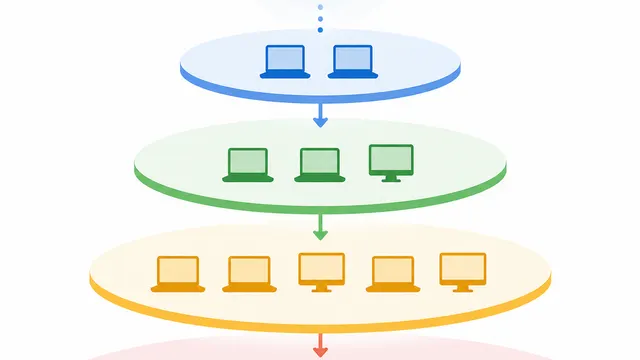
Windows Update Rings Explained for IT Teams
This guide explains Windows Update Rings and how they support phased patch deployment. It helps IT teams reduce risk and improve update control using Level.
Automations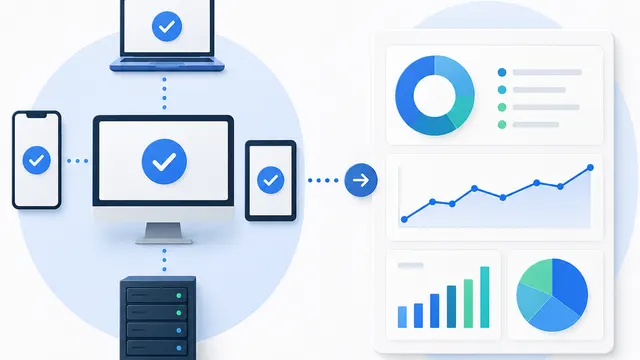
Endpoint Compliance Reporting Explained
This guide explains endpoint compliance reporting and how it supports secure, scalable endpoint management. It helps IT teams improve visibility and enforce policies using Level.
IT Management
RMM Implementation Checklist for Internal IT Teams
This guide outlines a step-by-step RMM implementation checklist for internal IT teams. It helps standardize deployment and improve operational efficiency with Level.
Product
What Is a Motherboard Chipset?
A motherboard chipset manages communication between processors and hardware devices. This guide explains how chipsets work, why they matter, and how they affect compatibility, security, and endpoint management.
IT Management
How to Create a Patch Management Workflow
This guide explains how to create a structured patch management workflow for consistent and secure updates. Learn how automation improves efficiency and reduces risk.
Automations
How to Build an Endpoint Management Policy
Learn how to create a structured endpoint management policy for consistent monitoring and security. This guide covers key components, steps, and best practices for scalable IT operations.
IT Management
RMM Implementation Checklist for MSPs
Learn how RMM software helps MSPs automate monitoring, improve operational efficiency, and scale IT service delivery. This guide covers RMM functionality, implementation best practices, vendor evaluation criteria, and automation strategies for managed service providers.
MSP
IT Asset Management: How to Track, Manage, and Optimize Assets
This guide explains how to track and manage IT assets across their lifecycle. Learn how to optimize resources, improve visibility, and strengthen security.
IT Management
What Is Packet Loss?
Packet loss occurs when data packets fail to reach their destination across a network. This guide explains packet loss causes, business impact, troubleshooting methods, and why it matters for IT teams.
Networking
PSA and RMM Integration Explained
This guide explains how PSA and RMM integration connects technical and business workflows. Learn how it improves efficiency, automation, and scalability for MSPs.
MSP
How Businesses Detect Cyber Threats Early and Reduce Security Risk
Early threat detection is essential for reducing cybersecurity risk in modern organizations. This guide explains how businesses monitor endpoints, analyze security events, and use automation to identify attacks before they spread.
Security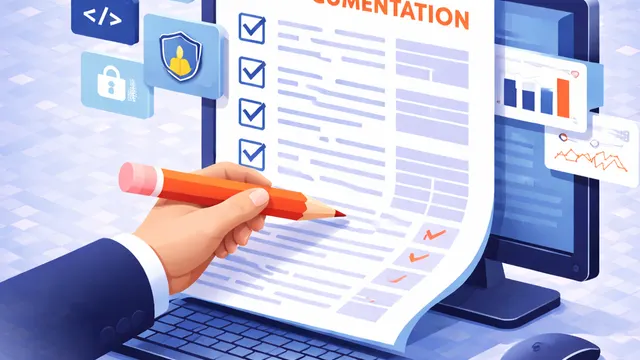
What Is IT Documentation and Why Is It Essential for Reliable IT Operations?
IT documentation provides the operational knowledge that keeps IT environments reliable and manageable. This guide explains what IT documentation is, why it matters, and how IT teams structure and maintain it effectively.
General
Why Most MSPs Struggle to Scale (And the 7 Stages Every MSP Goes Through Before Reaching 1,000 Endpoints)
Most MSPs grow through predictable stages, from founder driven operations to scalable service delivery. Understanding these stages helps providers identify the bottlenecks that slow growth and build systems that allow them to scale efficiently.
General
What Is AI Governance and How to Implement It
AI governance provides the policies, oversight, and operational controls needed to manage artificial intelligence responsibly. This guide explains the principles of AI governance and how organizations can implement a practical framework.
General
What Questions Should Businesses Ask MSPs Before Hiring One?
A guide explaining the key questions businesses should ask MSPs before hiring one, helping organizations evaluate reliability, security practices, and long-term service capability.
MSP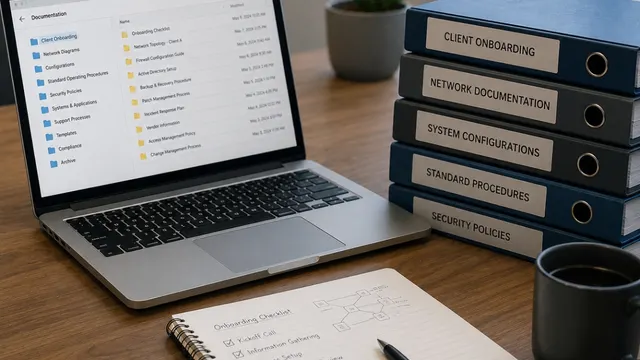
MSP Documentation Standards: How to Build Scalable and Consistent IT Operations
This guide explains how managed service providers can create a standardized client onboarding process that improves operational efficiency, strengthens cybersecurity, and supports scalable IT service delivery. It also outlines practical onboarding steps, automation opportunities, and best practices for building repeatable MSP workflows that enhance client experience and long-term growth.
MSP
Business-First IT Strategy Explained
A guide explaining how business-first IT strategies align technology decisions with business outcomes to improve reliability, efficiency, and organizational growth.
General
How MSPs Create Service Proposals That Win Business and Scale Operations
A guide to how managed service providers design proposals that win deals while maintaining scalable operations and consistent service delivery.
MSP
How to Reduce Alert Fatigue in IT Monitoring
Alert fatigue can overwhelm IT teams and lead to missed critical incidents. Smarter monitoring strategies help reduce noise and improve response times.
Automations
What Does an IT Manager Do and Why Is the Role Important for Businesses?
A guide to the responsibilities of IT managers, how the role has evolved over the past decade, and why strong IT leadership is essential for modern businesses.
General
What Skills and Responsibilities Define Real IT Leadership Today?
Modern IT leadership goes far beyond managing infrastructure. Today’s technology leaders must combine strategic thinking, cybersecurity awareness, automation, and team leadership to drive business outcomes in increasingly complex digital environments.
General
What Is a NOC?
This blog explains what a NOC is, how Network Operations Centers work, and why they matter for IT operations and MSP service delivery. It also explores NOC responsibilities, tools, metrics, and how Level supports proactive endpoint management and operational efficiency.
Networking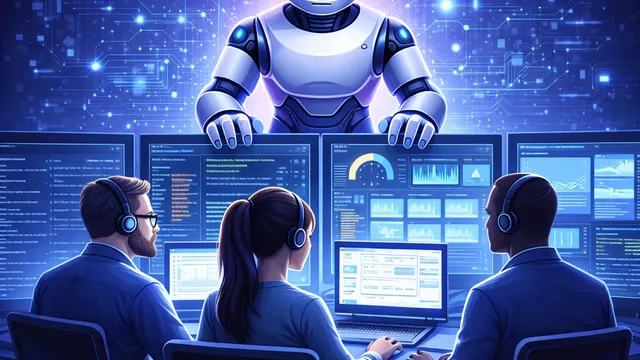
Will AI Replace IT Service Providers or Change How They Work?
AI is rapidly changing how IT services are delivered, but it is not eliminating the need for managed service providers. Instead, it is shifting MSPs toward automation, proactive operations, and higher value advisory roles.Suggested URL Slug: /ai-and-the-future-of-managed-it-services
General
Why Devices Go Offline
Devices can go offline because of power problems, connectivity issues, security policies, software failures, or hardware faults. Understanding the root causes helps IT teams troubleshoot faster, improve visibility, and reduce downtime.
General
How to Create IT SOPs for Repeatable Operations
Learn how IT teams and MSPs can create standardized SOPs that improve operational consistency, strengthen security, and support scalable service delivery. This guide covers SOP frameworks, documentation best practices, automation strategies, and repeatable operational workflows.
IT Management
How to Read Windows Logs
Windows logs provide detailed records of operating system, application, service, and security activity. By understanding how to filter, analyze, and correlate log events, IT teams can troubleshoot problems faster and gain deeper visibility into endpoint behavior.
General
What Is DHCP?
DHCP automatically assigns IP addresses and network settings to devices so they can communicate on a network. It reduces manual configuration, supports scalability, and helps IT teams manage connectivity more efficiently.
Networking
How SaaS Companies Scale Infrastructure and Operations as They Grow
An overview of how SaaS companies scale infrastructure, teams, and operations as their platforms grow.
General
Hardware Lifecycle Management for IT Teams
Hardware lifecycle management helps IT teams maintain reliable, secure, and cost-effective infrastructure. Learn how proactive lifecycle planning improves visibility, uptime, and operational efficiency.
IT Management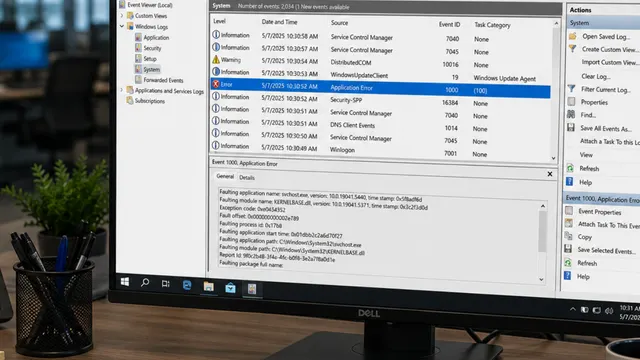
What Is Event Viewer?
Event Viewer is Microsoft's built-in log analysis tool that helps administrators investigate application, system, and security events recorded by Windows. By understanding event logs, event levels, and Event IDs, IT teams can troubleshoot issues more efficiently and gain better visibility into endpoint activity.
General
How SMB IT Infrastructure Should Be Designed for Growth and Reliability
A practical guide to designing SMB IT infrastructure that supports growth while maintaining reliability and security.
General
Cybersecurity Awareness: What It Is and Why It Matters
Cybersecurity awareness helps employees recognize and avoid cyber threats. This guide explains how IT teams and MSPs support it using modern security tools.
Security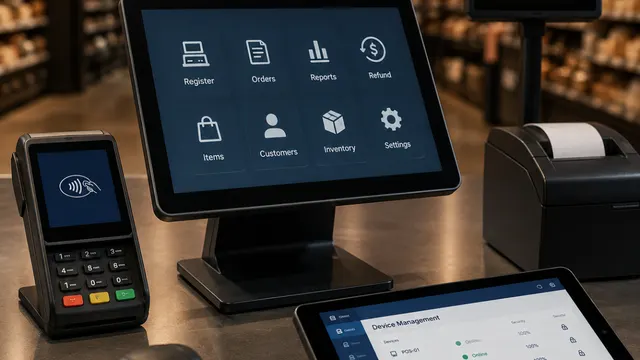
Retail Endpoint Management: Best Practices for Multi-Store IT Operations
Retail endpoint management helps IT teams secure, monitor, and maintain POS systems, mobile devices, kiosks, and other store technology across distributed locations. Learn the best practices for improving visibility, reducing downtime, and supporting compliance using guidance from NIST, CIS, PCI SSC, and the FTC.
General
What Is DNS?
DNS translates domain names into IP addresses that computers use to locate websites and services. It is a foundational internet system that supports web browsing, email, and network communication.
Networking
Operational Visibility Explained: Why IT Teams Need a Complete View of Their Environment
Operational visibility gives IT teams a complete view of their infrastructure by combining asset inventories, telemetry, logs, and monitoring data. Learn how better visibility improves troubleshooting, security, and operational decision making across modern IT environments.
Networking
Software Inventory Management Best Practices
Software inventory management helps organizations track applications, improve security, and optimize software spending. Learn the best practices for maintaining visibility and control across modern software environments.
IT Management
Why IT Must Be Involved in Every Technology Purchase
Involving IT early prevents problems, reduces waste, and improves outcomes. Organizations that build collaborative purchasing processes gain a significant advantage in efficiency and risk management.
General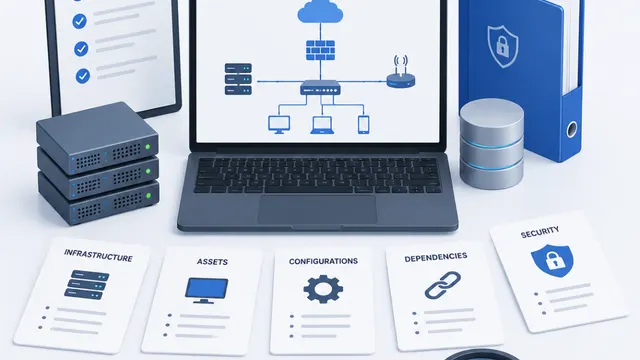
Network Documentation Best Practices for Modern IT Teams
Good network documentation is more than a network diagram. Learn proven best practices for documenting infrastructure, assets, configurations, and dependencies to improve troubleshooting, security, and IT operations.
MSP
What Is Windows Configuration Designer?
Windows Configuration Designer simplifies Windows deployment by creating reusable provisioning packages that configure devices without reinstalling the operating system. Learn how WCD works, what it can automate, and where it fits into modern Windows device management.
General
Closing Visibility Gaps in Modern IT Environments
Modern IT environments are complex and distributed. Observability gaps create blind spots that slow troubleshooting and increase risk. Here is how to identify and close them.
Security
The Workload Burden Blocking Career Growth in IT
Most IT professionals want to learn new technologies and move into higher roles. Yet many stay stuck in operational work for years. The reason is not lack of ambition. It is a lack of time.
General
The Financial Impact of Inefficient IT
Inefficient IT is a compounding tax on the business. It shows up as downtime, technical debt, and productivity loss that spread across teams. This breakdown explains the real cost categories and how IT leaders can reduce financial leakage.
Security
Hybrid Cloud Strategy, The Future of Infrastructure Is Already Here
Hybrid cloud is no longer a transition phase. It is now the default operating model for modern IT. Understanding how it evolved and where it is heading is critical for MSPs and internal IT teams managing distributed environments.
General
Quantum-Safe Encryption
Quantum computing will eventually break much of today’s encryption. That future is not as far away as it sounds. For MSPs and internal IT teams, the transition to quantum-safe encryption is becoming a long-term infrastructure project that affects security, compliance, vendors, and endpoint management.
Security
Why New MSPs Struggle to Win Clients and What to Do About It
Many new MSPs expect demand to appear quickly. Instead, the first few years often feel slow and unpredictable. The problem is rarely technical ability. It is trust, positioning, and pipeline maturity.
General
What Challenges Do IT Teams Face When Implementing Automation?
IT automation implementation challenges include complexity, lack of standardization, integration issues, and risk of unintended actions, which can be managed with proper planning and testing.
Automations
Green IT: Why Sustainable IT Is Becoming a Business Priority
Green IT focuses on reducing the environmental and operational impact of technology by improving energy efficiency, managing hardware lifecycles, optimizing cloud usage, and automating IT operations. As energy costs rise and sustainability expectations grow, adopting Green IT practices helps organizations lower costs, improve efficiency, and build more resilient IT infrastructure.
General
Automation Powered by Domain-Specific AI
AI is moving from experimentation to real operational use. Domain-specific language models are at the center of this shift, helping organizations deploy AI safely and effectively inside real workflows.
Automations
When Ticket Queues Take Over: Breaking the Cycle of Reactive IT
Many IT teams spend their days reacting to tickets instead of improving systems. Discover how to break the cycle and shift from reactive support to proactive IT.
General
Ensuring Business Continuity with Backup and DR Testing
AI generated content and deepfakes are changing how organizations think about trust. Digital provenance helps verify where content comes from and whether it has been altered. Here is what IT teams and MSPs need to know.
General
Can RMM Software Manage Large-Scale Environments?
RMM software enables IT teams to manage large-scale environments by automating tasks, centralizing control, and maintaining visibility across all endpoints.
Product
AI-Powered Cyberattacks: What MSPs Should Monitor in 2026
AI is helping attackers make phishing, social engineering, and cyberattacks faster and more convincing. This guide explains the AI-related threats MSPs should monitor and how endpoint visibility and automation help security teams keep up.
Security
Confidential Computing and Data Privacy
Confidential computing and data privacy address the same goal from different angles. This article explains how confidential computing protects data while it is being processed and how it supports broader data privacy responsibilities as organizations handle sensitive information across cloud platforms, endpoints, and modern analytics environments.
Security
Uptime Monitoring Explained for MSPs
Uptime monitoring helps MSPs detect outages faster and improve service reliability. Learn how proactive monitoring supports better client experiences and operational visibility.
MSP
When to Increase Your IT Budget and Build a Practical ROI Framework
IT budget increases should be driven by measurable signals, not the vague idea of needing more tools. This guide shows how to identify the right moment to increase IT spending using risk, growth, efficiency, and ROI signals that leadership already cares about.
General
AI Proof Careers in IT and How to Position Yourself for the Future
AI will automate tasks, not entire jobs. Discover which IT careers are growing because of AI and learn how to future proof your career.
General
Work Sprawl vs Tool Sprawl
Work sprawl and tool sprawl create hidden complexity that slows down growing IT teams. This guide explains the difference, why they overlap, and how to fix both without adding more tools.
General
What Is RMM Software?
RMM software allows IT teams to monitor, manage, and automate devices remotely from a centralized platform, improving efficiency and visibility.
Automations
How Ransomware Changed from 2025 to 2026 and What Organizations Must Do
Ransomware in 2026 is more automated, more fragmented, and more focused on data extortion than ever before. This guide compares key trends from 2025 and outlines what IT teams can do to stay ahead.
Security
Patch Management for MSPs: Challenges, Maturity, and Why It Defines Client Trust
Patch management is more than system updates. For MSPs, it defines security posture, client trust, and long-term growth. This guide breaks down real-world challenges and how mature providers turn patching into a scalable business capability.
General
When MSPs Should Let Clients Go
Not every client helps your MSP grow. This guide breaks down the warning signs of bad-fit accounts, why providers struggle to walk away, and how smarter standards protect your team, margins, and future.
General
Why DMARC Is Getting So Much Attention Right Now
DMARC is no longer a niche email setting. This guide explains what changed, why the industry is paying attention, and how IT teams and MSPs can roll it out without breaking business email.
Security
Optimize Your IT Tool Stack Without Losing Visibility or Control
IT tool sprawl drives cost, risk, and operational friction. This guide shows how to optimize your IT tool stack using outcome-based planning, rationalization, and simple governance.
General
Public Sector Disaster Recovery: What’s Changing
Disaster recovery in the public sector is shifting from a compliance exercise to a resilience strategy. This guide explores recent challenges, industry changes, and what government IT teams should prepare for over the next few years.
Security
What Is Deduplication in IT and Why It Matters for RMM in 2026
Deduplication is a critical technology for modern IT teams and MSPs looking to scale backups, reduce storage costs, and improve performance. This guide explains how deduplication works and why it plays a growing role in RMM-driven environments in 2026.
Security
Manufacturing IT Is Being Rebuilt Under Pressure, Not Innovation Hype
An in-depth look at how manufacturing IT strategy has evolved under operational pressure, what changes delivered real stability, and how manufacturers are preparing for the next phase of digital operations.
General
Self Healing RMM Explained: How Internal IT Teams and MSPs Reduce Downtime Without Constant Intervention
An in-depth explanation of self healing RMM, how it works in real IT environments, and how internal IT teams and MSPs use automation to reduce alerts, prevent downtime, and scale support.
General
Tool Bloat in Modern IT Environments: Why It Happens, When to Fix It, and How High-Performing Teams Reduce It
A systems-level analysis of tool bloat in modern IT environments, explaining how overlapping tools emerge, what triggers consolidation, how long remediation takes, and how mature teams reduce complexity without increasing risk.
General
How Mature IT Teams Reduce Operational Risk
Operational maturity goes beyond deploying more IT tools. Discover how mature IT teams reduce operational risk through governance, visibility, standardized processes, and continuous improvement using proven guidance from NIST, CISA, ISO, CIS, and CERT.
MSP
What Are the Key Features of RMM Software?
RMM software features include monitoring, automation, remote access, patch management, and asset tracking, enabling efficient IT operations.
Product
MSP or Internal IT? How Businesses End Up on the Wrong Path and When to Switch
A practical guide to choosing between internal IT, MSPs, or a hybrid model, including common mistakes, warning signals, and when changing your IT approach becomes necessary.
General
Why Complete IT Visibility Is Harder Than It Sounds
Complete IT visibility is more than discovering devices. Learn why cloud services, SaaS applications, identities, software, and constantly changing environments create visibility gaps, and how organizations can build a more accurate view of their IT infrastructure through continuous asset management.
Security
How to Forecast IT Workload Growth Before Capacity Becomes a Problem
Forecasting IT workload growth helps organizations prepare for future demand before service quality suffers. Learn how to combine historical data, workforce planning, capacity planning, and proven forecasting methods to make smarter IT planning decisions.
MSP
How to Choose the Right RMM Software?
Choosing the right RMM software involves assessing features, usability, scalability, and cost to ensure it fits your IT operations and growth.
Product
Is Starting an MSP Still Worth It in 2026 and Beyond? A Practical Guide for IT Professionals and Operators
A practical guide for IT professionals evaluating whether starting a managed service provider still makes sense. Covers demand, costs, risks, tooling decisions, and what successful MSPs do differently today.
General
Starting a Career in IT: What It Really Looks Like and How to Build It Right
This post reassures beginners entering IT by setting realistic expectations, explaining how early careers actually unfold, and emphasizing fundamentals, habits, and environments over titles or tools. It reduces anxiety, reframes mistakes as normal, and helps readers understand what long term growth looks like in IT.
General
What Are the Benefits of Using RMM Software?
RMM software improves efficiency, reduces manual work, enhances visibility, and enables scalable IT operations through monitoring, automation, and remote access.
Product
IT Trends Shaping 2026, What Every IT Team and MSP Should Prepare For
AI, security, cloud, and edge computing are reshaping IT. Discover the key trends driving modern infrastructure and what IT teams should do next.
General
How Do MSPs Use RMM Software?
MSPs use RMM software to monitor systems, automate tasks, provide remote support, and manage multiple client environments from a single platform.
MSP
The IT Issues Internal Teams and MSPs Will Face in 2026, and How to Prepare Now
A practical breakdown of the major IT operational challenges emerging by 2026, from tool sprawl and automation limits to security pressure, compliance, and burnout, and how IT teams and MSPs can prepare.
General
How to Implement IT Automation in Your Organization?
Implementing IT automation involves identifying repetitive tasks, standardizing processes, and building workflows that run automatically to improve efficiency and scalability.
Automations
How Does RMM Software Work?
RMM software works by using agents to collect data, a centralized platform to analyze it, and automation to respond to issues in real time.
Product
RMM vs Endpoint Management, What’s the Difference?
RMM focuses on monitoring, automation, and remote support, while endpoint management is the broader strategy for managing devices, policies, and lifecycle.
Product
Education IT Trends for 2025 and Beyond
An in-depth look at how education IT environments were tested in 2025, the operational lessons schools learned, and what realistic IT strategies will matter most going into 2026.
General
How Modern IT Management Improves Retail Store Operations in 2026
Retailers depend on modern IT management to reduce downtime, strengthen security, and maintain consistent device performance across all store locations. Centralized visibility and automation help IT teams support smooth customer experiences and scalable retail operations.
General
How Smart City Technology Is Transforming Local Government Services in 2026
This blog explains how smart city technologies are reshaping local government operations in 2026, from automation and IoT networks to analytics and cybersecurity. It highlights the challenges that arise as cities scale digital infrastructure and why dependable endpoint visibility, proactive monitoring, and automation are essential for service reliability. The article also outlines how Level helps public sector IT teams streamline device management and improve operational stability.
General
The New Standard for MSP Support in 2026: What Providers Expect and How to Deliver It
What MSPs expect from vendor support in 2026, why expectations have risen, and how the complexity of modern environments demands faster responses, deeper technical insight, and predictable escalation.
General
SBOM: The New Foundation of Secure and Scalable IT Management
This blog breaks down what a Software Bill of Materials (SBOM) is and why it has become vital for modern IT operations. It explores how SBOM improves vulnerability detection, compliance, supply chain security, and incident response, especially at scale. The article also explains how Level’s IT management platform turns SBOM insights into actionable workflows through automation, reporting, and real time endpoint visibility.
General
Cloud Migration and Hybrid Cloud Adoption Strategies
Cloud migration and hybrid cloud adoption from the perspective of MSPs and internal IT teams who are responsible for planning and executing modernization efforts. Level improves visibility, automation, patching, and monitoring so teams can manage hybrid infrastructures with confidence.
General
How AI Is Transforming MSPs and Internal IT Teams
Artificial intelligence is changing the core of IT work. MSPs and internal IT teams are using AI for ticket triage, predictive maintenance, security, knowledge support, and large scale analytics.
General
Remote Management Tools: How Modern IT Teams Support Devices at Scale
What remote management tools are and why they are essential for MSPs and IT teams that need to support distributed devices. How these tools enable secure access, monitoring, automation, and control from any location.
General
How Does IT Automation Improve Endpoint Management?
IT automation improves endpoint management by enabling automated monitoring, patching, configuration, and remediation across all devices at scale.
Automations
Building a Scalable Device Policy Strategy: Global Policies, Provisioning, and Policy Based Patching
This blog explains how IT teams and MSPs can build a scalable device policy strategy using global policies, automated provisioning, and policy based patching. It highlights how Level centralizes these workflows to reduce manual work and improve consistency across every endpoint.
Security
Vulnerability Assessment Tools for MSPs, How to Strengthen Security and Reduce Risk
This blog explains how vulnerability assessment tools help MSPs detect weaknesses, prevent ransomware, and stay compliant. It also shows how combining scanners with Level's automation platform enables faster remediation and stronger security across client environments.
Security
What Are the Benefits of IT Automation for IT Teams?
IT automation helps IT teams reduce manual work, improve efficiency, and scale operations while maintaining consistency and faster response times.
Automations
Pricing Models That Don’t Scare SMB Clients
This blog explains how MSPs can design pricing models that appeal to SMB clients by keeping costs predictable, scalable, and tied to clear value. It highlights how Level supports these models with automation, monitoring, and device-level insights that improve service delivery and reduce operational overhead.
General
MSP Marketing for 2026: Proven Strategies for Growth, Trust, and Differentiation
The MSP market in 2026 is more competitive than ever. This blog explores proven marketing tactics that help MSPs differentiate, earn trust, and translate operational excellence into sustainable growth with Level’s comprehensive IT management platform.
General
The MSP Tool Sprawl Problem, Why Fewer Tools Mean Better Productivity
MSPs are no longer struggling with missing functionality, the challenge is too many tools. This blog explores tool sprawl, how it drains productivity, increases costs, drives burnout, and how Level solves the problem with unified endpoint operations.
General
What Is an MSP? A Complete Guide for Businesses and IT Teams
This blog explains what an MSP is, how managed service providers operate, and what value they deliver to businesses and IT teams. It highlights how Level supports MSPs with scalable automation, device management, monitoring, and reporting that improve service delivery and operational efficiency.
MSP
Why MSP Risk Management Matters More Than Ever
Core risks MSPs face, the practices that reduce exposure, and the trends reshaping how MSPs protect their internal environments and client systems. Challenges such as cybersecurity threats, supply-chain risk, compliance pressure, operational complexity, and rising client expectations.
MSP
Background Management in IT Operations: Why It Matters
Why Background Management Matters: The Hidden Engine of Efficient IT Operations
General
IT Automation vs Manual IT Management, What’s the Difference?
IT automation executes tasks automatically using workflows, while manual IT management relies on human effort. Automation improves speed, consistency, and scalability.
Automations
The IT Life Cycle: What to Expect as We Enter 2026
Challenges organizations still face and how MSPs and internal IT teams handle lifecycle management differently. See how Level supports every stage of the lifecycle through automation, inventory visibility, monitoring, remote access, patching, and reporting.
General
How Do You Automate Patch Management?
Automated patch management uses policies and workflows to detect, deploy, and verify updates without manual intervention, improving security and efficiency.
Automations
What Tasks Can Be Automated in IT Operations?
IT operations tasks like patch management, monitoring, software deployment, and user provisioning can be automated to reduce manual workload and improve efficiency.
Automations
The End-of-Year Guide to Asset and Inventory Accuracy for MSPs and IT Teams
Ensure your IT operations start the new year strong with accurate, organized asset management.
General
Unified Observability for MSPs: Turning Real Time Dashboards into Actionable Insight
This blog explains how unified observability enables MSPs to convert real time dashboards and telemetry into actionable insight that improves reliability and operational performance. It highlights how Level delivers deep visibility, correlated data, and automation triggers that help MSPs identify issues faster and respond with precision.
Product
How Smart MSPs Win Renewals in 2026: A Complete Guide to Pre-Renewal Audits
Pre-renewal audits help MSPs prove value, strengthen client trust, and secure contract renewals with confidence. This guide explains how to plan, execute, and automate effective audits using Level to streamline every step.
General
Why Is IT Automation Important for Businesses?
IT automation helps businesses reduce manual work, improve efficiency, enhance security, and scale IT operations without increasing overhead.
Automations
Cloud-Native Scalability for IT Management Teams
This blog explains what cloud native scalability means for IT management and why modern MSPs and IT teams depend on scalable architectures to support rapid growth, automation, and consistent performance. It highlights how Level’s cloud native design delivers real time visibility, flexible automation, and reliable scalability across thousands of devices.
General
Understanding IT Governance in the Public Sector
This blog explains how IT management and governance operate in public-sector organizations, the challenges agencies face and how size affects their ability to modernize. It outlines common gaps in public-sector IT practices and shows why Level’s unified IT management platform delivers clearer visibility, stronger security and more efficient operations than traditional RMM tools.
General
Infrastructure Health Checks Before Holiday Slowdowns: Lessons Learned and Smarter Steps for Tenured IT Teams
Use the holiday slowdown to strengthen your IT infrastructure and prevent costly surprises in the new year. This guide shows experienced IT teams how to run smarter infrastructure health checks that improve performance, security, and reliability.
General
What Does RMM Software Do?
RMM software monitors systems, automates maintenance, provides remote access, and helps IT teams manage devices efficiently from a central platform.
Product
Why Monitoring Matters More Than Ever: A Strategic View of LogicMonitor and Level for the Modern Enterprise
Monitoring is no longer reactive. LogicMonitor gives visibility across infrastructure, while Level automates remediation so IT teams prevent issues, not chase them.
General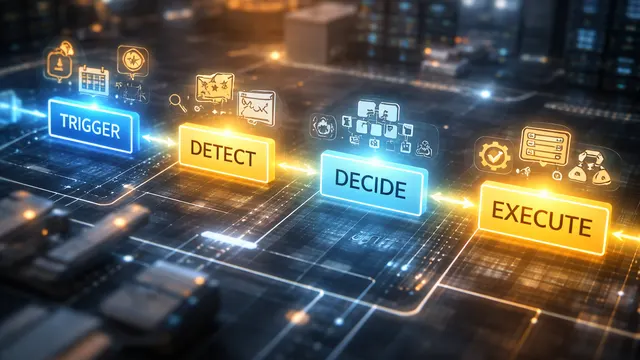
How Does IT Automation Work?
IT automation uses triggers, conditions, and workflows to execute IT tasks without manual effort. It helps teams reduce repetitive work, improve speed, and scale operations efficiently.
Automations
Ending Support for Outdated Windows and macOS Versions in 6 Months
Level will end support for outdated Windows and macOS versions on May 4, 2026, to enhance security, performance, and reliability across the platform.
General
Strengthening Cybersecurity in Retail, How IT Teams Can Protect POS, Endpoints, and Customer Data
Retailers face rapidly growing cybersecurity challenges as store environments become more connected and data driven. Strong security practices for POS systems, endpoints, and customer data help IT teams maintain safe and resilient operations.
Security
Public Sector Security and Compliance, What IT Teams Must Prioritize in 2026
Most important security and compliance priorities public sector IT teams need to manage in 2026. Rising threats, expanding digital services, and stricter regulations are reshaping government cybersecurity strategies.
Security
Endpoint Management Challenges: What IT Teams Struggle With
IT teams face challenges in endpoint management due to scale, security risks, and remote environments. Centralized control and automation help address these issues.
General
What 2025 Taught the IT Industry and MSPs and How to Prepare for 2026
2025 was a turning point for MSPs and the IT industry. Automation, client transparency, and specialization redefined what it means to grow and lead in managed services.
General
MSP Marketing Strategies for 2026: How to Scale, Stand Out, and Future-Proof Your Growth
The MSP landscape is evolving quickly heading into 2026. To stay ahead, managed service providers need smarter, data-driven marketing that builds trust and measurable value.
General
Scaling Endpoint Management: How to Support Growing Organizations
Scaling endpoint management helps IT teams manage more devices efficiently using automation, centralized systems, and standardized policies.
General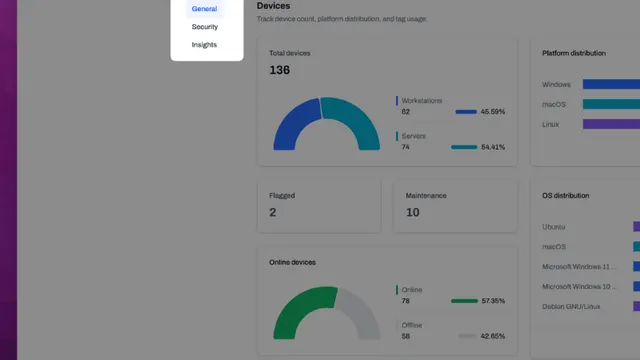
Why Clear Reporting Matters: Turning IT Data into Actionable Insights
Clear IT reporting is essential for visibility, performance, and decision-making. See how teams use reporting to turn complex data into clear insight.
Product
Endpoint Management: How It Improves Security
Endpoint management improves security by enforcing policies, applying updates, and monitoring devices in real time. It reduces risk and strengthens overall protection.
General
Building IT Resilience: How to Keep Systems Strong, Secure, and Always Running
IT resilience helps teams stay secure, reduce downtime, and maintain performance through better visibility and automation with Level.
General
Service Validation Made Simple: Proving IT Value to Clients
Simplify service validation, automate proof of value, and transform IT data into meaningful insights using an integrated platform like Level.
General
Beyond Backups: Building a Resilient Disaster Recovery Strategy
Backups only protect data. A resilient disaster recovery strategy goes further, restoring systems and operations quickly so the business never stops.
General
Real-Time Endpoint Monitoring: How It Works and Why It Matters
Real-time endpoint monitoring tracks device activity and performance continuously. It enables IT teams to detect issues instantly and respond quickly.
Product
IT Automation: What It Is and How It Works
IT automation uses software and scripts to perform tasks without manual effort. It improves efficiency, consistency, and scalability in IT operations.
Automations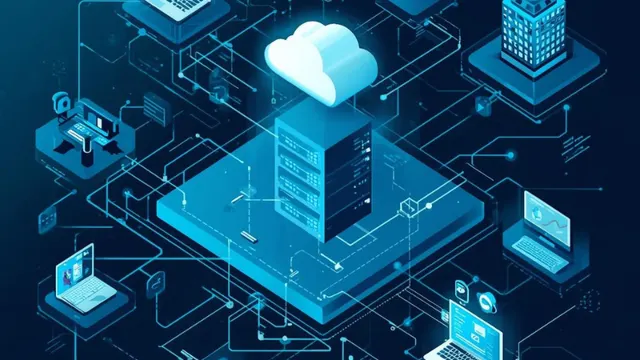
The Role of MSPs in Managing Edge Computing Environments
Edge computing is changing how businesses process data. For MSPs, it brings new challenges, costs, and opportunities. Learn why edge became relevant, how it impacts cost, and what it means for the future of IT management.
General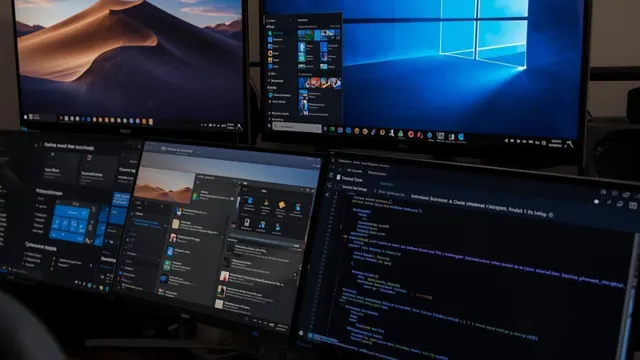
How MSPs Can Simplify Multi-OS Environments with Cross-Platform Tools
MSPs are juggling Windows, macOS, Linux, and mobile devices every day. Discover how cross-platform tools cut complexity, lower costs, and make multi-OS management simple.
General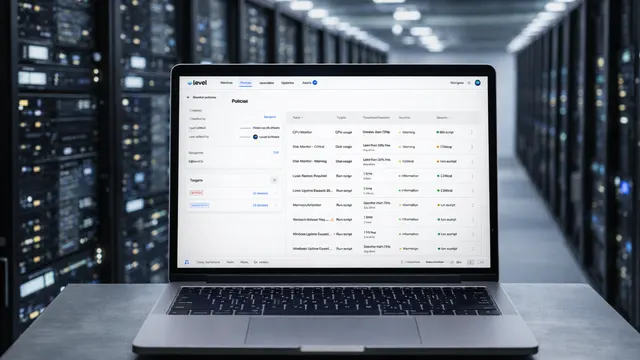
Endpoint Management Software: Key Features Explained
Endpoint management software provides features like monitoring, automation, patch management, and security enforcement. These capabilities help IT teams manage devices efficiently at scale.
Product
Cutting Through the Bloat: Why RMM Simplicity Isn’t a Luxury, It’s a Necessity
RMM platforms should make IT management easier, but many have grown bloated with unnecessary complexity. This blog explores the hidden costs of RMM bloat, how to identify when your tool is slowing you down, and why Level’s lean approach gives MSPs and IT teams the simplicity they need to move faster.
Product
Driving Predictable IT Revenue with Level
Monthly Recurring Revenue (MRR) is the backbone of IT service growth, driving predictability and profitability for MSPs and internal IT teams. This blog explores why MRR is critical, its direct connection to RMM platforms, and how Level empowers IT organizations with transparent pricing, automation, and scalable management to build stable, recurring income.
Product
Zero-Touch Deployment Explained: Technical Guide for MSPs and IT Teams
Zero-touch deployment is transforming endpoint management. By automating enrollment, configuration, and monitoring, ZTD enables MSPs and IT teams to scale faster, reduce risk, and deliver consistent client value.
General
Endpoint Management vs RMM: What’s the Difference?
Endpoint management is the strategy for managing devices, while RMM is the tool used to execute it. Together, they enable efficient and scalable IT operations.
Product
Why Teams Switched RMM in 2025: Lessons From Level Clients
2025 became the year many MSPs and IT teams switched RMM platforms. Rising costs, automation failures, compliance gaps, and scalability limits drove the shift. This blog shares migration timelines, costs, preparation frameworks, and real outcomes and why Level became the trusted choice.
General
How RMM Simplifies IT for K–12 and Higher Education Institutions
Education IT teams are managing more devices than ever with fewer resources. Many schools already use RMM tools, but enterprise-grade platforms are often too costly and complex. This blog explains how RMM simplifies IT for K–12 and higher education, why institutions consider switching providers, and how modern solutions like Level deliver transparency, automation, and ease of use.
Product
How to Manage 2,000+ Endpoints Without Burning Out Your IT Team
Scaling past 2,000 endpoints changes everything for IT teams. Patch cycles slow down, alert fatigue sets in, and compliance reporting becomes unmanageable. The solution is not adding more technicians, but adopting an RMM that scales with automation, streamlined workflows, and low-latency remote access. Here’s how IT leaders can keep operations under control without burning out their teams.
Product
Top 10 PSA Software Tools for MSPs in 2025
PSA software is the hub of every MSP’s operations, from tickets to billing. In this blog, we review the top 10 PSA tools for 2025 and show how Level RMM integrates with leading PSAs like HaloPSA, DeskDay, and ZestMSP to streamline workflows and cut manual work.
MSP
Endpoint Management: Why It Is Important for Businesses
Endpoint management helps businesses secure, monitor, and control devices from a centralized system. It reduces risk, improves efficiency, and supports growth.
Product
Cutting Through the Illusion: Why RMM Automation Fails and How Level Gets It Right
RMM tools often promise seamless automation, but many IT teams discover silent failures, patching inconsistencies, and unreliable scripting that increase risk and frustration. This blog uncovers why automation frequently fails, the real costs of breakdowns, and how Level’s purpose-built approach ensures reliable, transparent automation that MSPs and IT teams can trust.
Automations
Beyond the SLA: How RMM Turns Agreements Into Accountability
SLAs are more than contracts, they are promises of performance. This guide shows how RMM platforms transform SLA compliance from static paperwork into measurable, automated accountability for IT teams and MSPs.
General
Honest Pricing, Better Decisions: Why Transparent RMM Pricing Builds Real Trust
Transparent pricing in RMM is more than a convenience—it builds trust, reduces friction, and empowers MSPs and IT teams to make better decisions. Learn why Level leads with clarity and how cost transparency supports faster buying cycles and predictable IT budgets.
Product
Breaking Free from RMM Vendor Lock-In: Why It Matters
Vendor lock-in is one of the biggest hidden risks in IT management, leaving MSPs and IT teams stuck with rigid contracts, bundled services, and costly migration barriers. This blog explores the real impact of lock-in, what to watch for in RMM platforms, and how Level is built to give IT professionals freedom through transparent pricing, open workflows, and contract-free flexibility.
General
Why SOCaaS and CaaS Are Now Core to Modern IT
Cybersecurity threats and compliance demands are rising. This guide explains why SOC as a Service (SOCaaS) and Compliance as a Service (CaaS) are now must-have solutions for IT teams and MSPs, and how RMM platforms like Level make them work.
Security
Unlocking Modern Endpoint Management with Microsoft Intune
Microsoft Intune provides powerful cloud-based device management for secure and compliant operations. When integrated with Level, it becomes a complete endpoint-management system with advanced automation, cross-platform visibility, and reporting.
IT Management
Endpoints in a Network: What They Are and Why They Matter
Endpoints are devices that connect to a network and send or receive data. They are essential for operations but must be managed and secured properly.
Product
Domain Controllers: Turning Alerts into Action
Domain Controllers are too important to monitor passively. Level’s monitoring policy combines proactive checks, automated restarts, and real-time alerts to keep AD services online and users connected.
General
Fixing Your Tech Stack: A Practical Guide for Internal IT Teams and MSPs
A messy IT tech stack leads to wasted spend, tool sprawl, and security gaps. This guide shows internal IT teams and MSPs how to fix inefficiencies, streamline workflows, and build a scalable tech stack that works.
General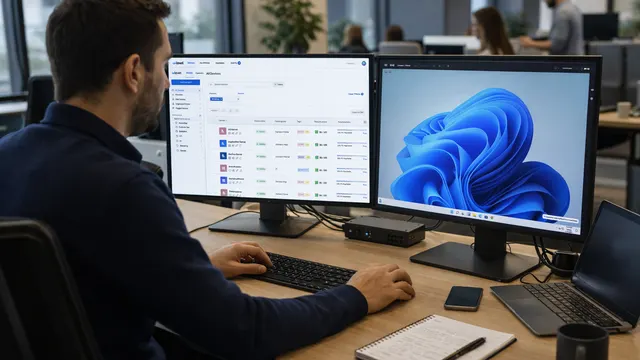
Endpoint Management: How It Works in IT Environments
Endpoint management connects devices to a centralized platform that monitors, secures, and controls them. It uses automation and real-time data to help IT teams manage systems efficiently.
Product
Why Flexible MSP Stacks Win
MSPs need toolsets that scale with growth. This guide explains why flexible MSP stacks outperform all-in-one platforms, how automation boosts efficiency, and where Level RMM fits as the backbone for modern IT management.
General
Cybersecurity in Manufacturing: Protecting Critical Systems
This blog explains the cybersecurity risks manufacturers face across OT systems, endpoints, and supply chain data and how centralized IT management helps reduce exposure. It also shows how Level strengthens protection with monitoring, remote management, patch control, and automation.
Security
Why Efficient Onboarding Is the Secret to MSP Growth
Onboarding is the hidden growth engine for MSPs. Streamlined, automated processes cut time to value, boost margins, and set the stage for scalable growth.
General
Built to Scale: Why Your RMM Should Grow With You (And How Level Delivers)
Not all RMMs can keep pace with growth. Legacy tools often slow down, cost more, and frustrate teams as demands increase. Level’s cloud-native, scalable design ensures fast performance, predictable pricing, and automation that grows with your business.
General
Role-Based Access Control (RBAC): A Practical Guide for IT Teams and MSPs
Role-Based Access Control (RBAC) is now essential for MSPs and IT teams. It secures data, simplifies access management, and ensures compliance at scale.
Security
Modern IT Management for Manufacturing: How Plants Can Reduce Downtime and Improve Productivity
This blog explains how manufacturing plants can reduce downtime and improve productivity by modernizing IT operations with centralized visibility, monitoring, and automation. It also shows how Level supports these goals with unified device management, real-time alerting, secure remote access, and scalable automation.
General
Automating Device Tagging with Service Based Detection
Manual device tagging wastes time and creates errors. Level’s Service Based Tagging Automation dynamically applies accurate tags based on real time service detection.
Automations
Why Retailers Are Moving to Cloud First IT
Retailers are accelerating their move to cloud first IT to improve agility, reduce costs, and strengthen operational reliability. Centralized management and strong security practices help IT teams support modern store environments effectively.
General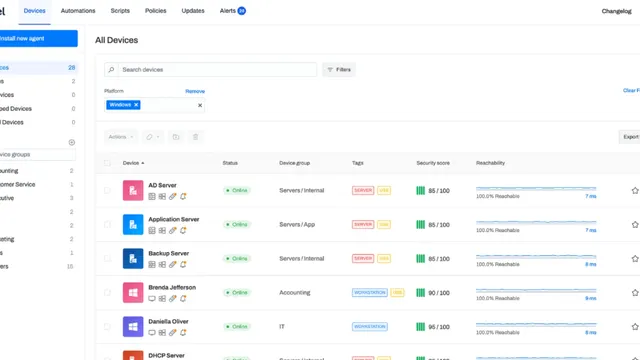
Why UI Design Matters in RMMs and How Level Got It Right
A cluttered RMM interface slows down technicians, increases onboarding time, and drives up costs. This blog explains why UI design is critical in RMM software and how Level delivers a faster, cleaner, and more efficient user experience compared to legacy tools.
Product
Why Manufacturers Are Adopting Cloud and Hybrid Infrastructure
This blog explains why manufacturers are increasingly adopting cloud and hybrid infrastructure to modernize operations, increase efficiency, and reduce risk. It also shows how Level supports these environments with centralized visibility, secure device management, automation, and monitoring.
General
2026 Cybersecurity Priorities to Strengthen Defense
Ransomware disruption, SaaS sprawl, supply chain compromise, and AI-driven fraud define cybersecurity in 2026.
Security
How RMM Simplifies Software Deployment for IT Teams and MSPs
RMM software makes software deployment faster, safer, and easier to manage at scale. See how it helps IT teams and MSPs streamline installs and updates.
Automations
How RMM Tools Like Level Support Bulletproof BCDR Strategies
Business continuity and disaster recovery (BCDR) is no longer optional, it is a critical strategy for IT resilience. This blog explains how RMM platforms like Level strengthen BCDR by improving endpoint visibility, automating recovery workflows, supporting compliance, and reducing downtime costs for MSPs and internal IT teams.
General
Why Compliance (HIPAA, GDPR, CMMC) Matters for MSPs
MSPs are on the frontlines of compliance. Whether it’s HIPAA, GDPR, or CMMC, clients expect providers to meet strict security and data protection requirements.
Security
Network Segmentation: Strengthening Security and Performance for Modern IT
Network segmentation helps IT teams and MSPs reduce risk, boost performance, and simplify compliance. Learn how segmentation works and how Level makes it easier to implement.
Product
WSUS vs Modern Patch Management: Why IT Teams Are Moving Beyond Legacy Approaches
WSUS was once the backbone of Windows patching. But at scale, it struggles with automation, reporting, and cross-platform coverage.
IT Management
How Small MSPs Can Compete with Big Players
Small MSPs don’t need massive budgets to compete. Agility, automation, and transparency let smaller teams outperform larger providers. This blog explains how MSPs can use the right RMM and strategy to scale smarter, deliver better client service, and build long-term trust.
General
Endpoint Lifecycle vs Cost Allocation: Building Financial Discipline Into IT Management
Endpoints are not just technical assets, they are financial entities. Each stage of the lifecycle carries hidden costs.
General
Transparent Pricing in RMM: Why Per-Endpoint Models Win
RMM costs should scale with actual workload, not opaque contracts. Learn why per-endpoint pricing reflects technical reality, safeguards MSP margins, and empowers IT teams with clarity. Level’s $2 per endpoint model leads the way.
Product
Rethinking RMM for Healthcare IT: What IT Teams Actually Need
Healthcare IT teams face relentless pressure to stay compliant, secure, and efficient with limited staff and resources. This blog explores why most RMM tools fall short in healthcare and how Level helps IT teams automate, monitor, and report without added complexity or costs.
General
The Future of IoT Device Management: What SGP.32 and eSIM Orchestration Mean for MSPs and IT Teams
IoT connectivity is evolving fast. With the SGP.32 eSIM standard and eSIM orchestration, MSPs and IT teams must rethink how they manage global device fleets.
General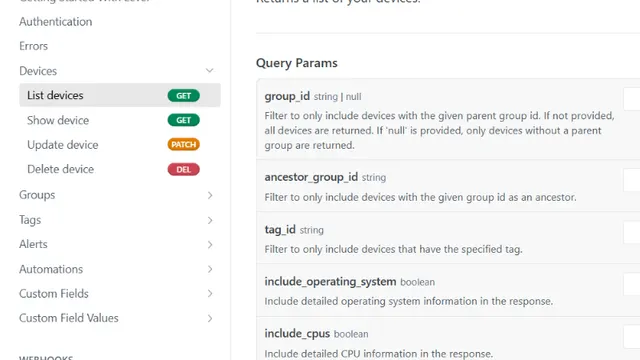
Harness the Power of Custom Integrations with the Level Public API
The Level Public API opens the door to seamless automation and integration, helping IT teams connect Level with the tools they use every day. From real-time Webhooks to secure data exchange, Level makes it easy to build smarter, faster, and more connected IT operations.
Automations
The Real Cost of Switching RMMs and How Level Makes It Easier
Switching RMM platforms is more than a licensing fee. Hidden costs like downtime, retraining, and client disruption can derail your business. This blog breaks down the real cost of entry and shows how Level makes migration faster, smoother, and less disruptive for MSPs and IT teams.
General
Rapid Deployment: Why Speed Defines MSP Success
Deployment speed is no longer optional for MSPs. Rapid deployment shortens onboarding, reduces risk, and accelerates client value. This blog explores the models, metrics, and technical foundations of rapid deployment—and how Level makes it practical at any scale.
Product
A Complete Overview of Credential Guard in Windows
Learn what Windows Credential Guard is and explore its benefits. Find out how to enable and disable it and discover how Level can secure endpoints.
General
9 Most Useful PowerShell Commands for System Admins
Explore the most useful PowerShell commands for system admins and find out how they work. Discover how Level automates PowerShell scripting.
General
Endpoint Security for MSPs: Understanding EDR and XDR
Modern endpoint security requires more than traditional antivirus, especially as ransomware and fileless threats increasingly target SMBs. EDR and XDR solutions provide behavioral detection, automated isolation, and fast incident response, particularly when combined with an RMM platform for operational control.
Security
Backup and Disaster Recovery Testing for Continuity
Regular disaster recovery tests and backup integrity checks protect your organization from data loss and downtime. Learn how Level empowers IT teams to automate, validate, and strengthen disaster recovery efforts with complete visibility and control.
General
SysAid and Level: The Practical Guide for IT Leaders Building a Modern Stack
SysAid organizes IT service management and SLAs. Level delivers real-time endpoint control, patching, and automation. Together, they close tickets faster and reduce tool sprawl.
General
Kandji vs. Level: Why IT Teams Are Moving Beyond Apple-Only Device Management
Kandji excels at Apple device management, but modern IT needs more. Level adds cross-platform control, scripting, monitoring, and automation in one platform.
General
Remote Device Management Systems in 2025: Features, Benefits, and Best Tools for IT Teams and MSPs
A 2025 guide to remote device management systems for IT teams and MSPs, covering key features, benefits, top tools, and best practices to improve security, uptime, and efficiency.
Automations
How to Secure IoT Devices: 12 Effective Strategies to Implement
Learn how to secure IoT devices and explore 12 effective strategies. Discover how Level can help you automate IoT management and security.
Security
File History Retention Windows: 7 Best Practices for 2025
Find the 7 best practices for File History retention (Windows) and see how Level can help you secure files and backups.
General
Identity and Access Management (IAM): Strengthening the Core of IT Security
Identity and Access Management (IAM) is the cornerstone of secure IT operations, helping MSPs and IT teams control access, enforce compliance, and protect every user interaction. Discover how integrating IAM with Level’s RMM platform enhances visibility, automation, and endpoint security across your entire environment.
Security
5 Best RMM for Small MSP Businesses in 2025
5 Best RMM for Small MSP Businesses. 1. Level 2. Atera 3. N-sight 4. Syncro 5. SuperOps
Product
15 Best Remote IoT Management Software Solutions
Explore the 15 best remote IoT management software solutions available on the market today. Discover what makes Level stand out as the best one.
Product
MSP Monitoring Explained: What Service Providers Need to Know
Learn what MSP monitoring is and why it's important. Find out how software can help you with MSP management and why Level is the best choice.
Product
5 Best Lansweeper Alternative Options in 2025 (Free + Paid)
5 Best Lansweeper Alternative Options in 2025: 1. Level 2. Snipe-IT 3. NinjaOne 4. ServiceNow IT Asset Management 5. ManageEngine Asset Explorer
Product
Best RMM Software for MSPs in 2025: Top Tools, Features, and Comparisons
Discover the best RMM software for MSPs in 2025, with in-depth comparisons of top tools, essential features, pricing, and real-world use cases to help you choose the right solution.
Product
What is the Best Jamf Alternative? Top 7 Options to Consider
Looking for a Jamf Alternative? Top 7 Options to Consider: 1. Level 2. Addigy 3. Kandji 4. Mosyle 5. ManageEngine 6. NinjaOne 7. Scalefusion
Automations
Top 11 IT Management Software Tools in 2025 for Businesses & MSPs
Best IT management software solutions by their type.
Product
The Complete Guide to Remote Device Management Systems
Remote work makes managing devices outside the office a challenge. This guide explains remote device management systems, their features, security benefits, and the top 7 tools for 2025.
General
RMM Tools in 2025: The Complete Guide for MSPs and Internal IT Teams
Remote monitoring and management (RMM) tools give MSPs and IT teams the power to manage, monitor, and secure endpoints from anywhere. This complete 2025 guide explains how RMM works, its benefits, the top tools to consider, and how to choose the right platform for your needs.
Product
How to Add Network Location in Windows 10: A Detailed Guide
Read our comprehensive guide on how to add network location in Windows 10, including the steps, benefits, and how to also remove it.
Automations
Top 7 PRTG Alternatives and Competitors
7 Best PRTG Alternatives to Consider in 2025: 1. Level 2. Checkmk 3. Zabbix 4. LogicMonitor 5. ManageEngine OpManager 6. Datadog 7. Dynatrace
Automations
What Is Data Corruption? (+ Tips to Prevent Corrupted Files)
Learn what data corruption is and explore the steps you can take to prevent it. Discover how Level's RMM software can help you avoid data corruption.
Security
File History Folder Windows Tutorial: How to Add or Remove Files
Explore our File History folder Windows tutorial and learn how to add, remove, and restore files. Discover how to secure files and backups with Level.
General
Co-Managed IT: A Hybrid Model for Internal IT Teams
Co-managed IT combines the strengths of in-house IT with the specialized capabilities of Managed Service Providers (MSPs). This model allows organizations to retain control of strategy and internal knowledge while gaining access to automation, monitoring, and specialized skills.
General
SOC for MSPs Explained: Achieve Compliance
Learn what SOC for MSPs means and why it's important. Explore different types of SOC and learn how Level can simplify SOC compliance.
Automations
What is the Role of an RMM Agent? (A Complete Guide)
In this article, we discuss the importance of RMM agents and cover the key features, benefits, and more.
Product
What is the Best Pulseway Alternative? Top 5 Options Compared
What is the Best Pulseway Alternative? Top 5 Options Compared: 1. Level 2. N-able N-sight 3. ManageEngine Endpoint Central 4. Atera 5. NinjaOne
Product
Secure Remote Access Solutions, Built for IT Teams and MSPs
5 Best Secure Remote Access Solutions for IT Teams. 1. Level 2. TeamViewer 3. AnyDesk 4. ScreenConnect 5. RemotePC
Security
Best RMM Software for Internal IT Teams and Small Businesses in 2025: Features, Comparisons, and Automation Tools
Discover the best RMM software for internal IT teams and small businesses in 2025. Compare features, pricing, automation tools, and integrations to find the right solution for your IT operations.
Product
Level vs Top RMM Competitors: A Complete Comparison Guide for 2025
In this article, we'll compare two RMM software programs to help you decide which one works better for you.
Product
Endpoint Management: How to Monitor, Secure, and Scale Endpoints
Endpoint management enables IT teams to monitor, secure, and control all devices from a single platform, ensuring consistency and visibility at scale. By combining automation, centralized policies, and remote access, organizations can reduce risk, improve efficiency, and support growth without added complexity.
Product
The Complete 2025 Guide to IT Asset Management (ITAM) for Businesses
Learn what IT asset management is and how it works. Discover different types of ITAM and their benefits. Find out how Level can automate ITAM.
Product
The Complete Guide to Cloud and Server Monitoring Tools (Linux, Windows, Hybrid, Remote)
Remote server monitoring enables IT teams to monitor and maintain servers efficiently, enhancing performance and security.
Automations
Learn Why RMM Security Is Crucial, the Risks Involved, and the Best Strategies to Keep Your RMM System Safe
RMM platforms are vital for IT teams and MSPs, but without proper security, they can become prime targets for cyberattacks. Learn the top strategies, tools, and compliance practices to protect your RMM from evolving threats while improving operational efficiency.
Product
On-Premise vs Cloud-Based RMM: Which One Is for You?
Discover the differences between on-premise and cloud-based RMM solutions to find the best fit for your business needs.
Product
Overview of Enterprise RMM? (Features + Top Pick For 2025)
Explore the overview of enterprise RMM, including its features and benefits. Discover how Level's Enterprise RMM can help you transform operations.
Product
Top 5 Tools for MSP Remote Monitoring & Management
Top 5 Tools for MSP Remote Monitoring & Management: 1. Level 2. Datto RMM 3. N-able N-central 4. Atera 5. ConnectWise Automate.
Product
Top 10 RMM Software Alternatives & Comparisons for 2025
Discover the top 10 RMM alternatives for 2025. From small IT teams to enterprises, compare leading platforms and find the right balance of automation, security, and cost.
Product
IT Automation: How to Eliminate Manual Work in IT Operations
IT Process Automation: Tools, Benefits, and How to Start
Automations
5 Best Remote Control Management Tools for IT Teams
We'll review the best remote management solutions for IT departments and also discuss the factors you need to consider to choose the right tool for your business needs.
Product
RMM vs. MDM: Key Differences for IT Management
Discover the key differences between RMM vs MDM, and get guidance on choosing the right IT management solution for your needs.
Product
Top NinjaOne Alternatives in 2025: The Complete RMM Software Comparison for IT Teams and MSPs
Discover the top NinjaOne alternatives for 2025, including Level, Atera, Pulseway, ManageEngine, and ConnectWise. Compare features, pricing, and scalability to find the best RMM software for your IT team or MSP.
Product
RMM Software: What It Is, How It Works, and How to Choose
Looking to simplify IT management? This 2025 RMM guide covers features, benefits, vendor comparisons, and PSA integration strategies to help MSPs and IT teams streamline operations and improve service delivery.
Product
RMM Pricing: How Much Does RMM Software Cost?
We will cover the various types of RMM software pricing, factors influencing the total cost, associated setup, and ongoing and hidden fees.
Product
RMM Patch Management: The Complete 2025 Guide to Securing and Optimizing Your IT Infrastructure
Patch management is critical to securing IT systems and ensuring compliance. This guide explores automated, cloud-based, and enterprise patching solutions, plus real-world case studies, to help MSPs and internal IT teams streamline updates, improve security, and meet industry regulations in 2025.
Product
RMM Meaning: What is Remote Monitoring and Management
Discover how Remote Monitoring and Management (RMM) software streamlines IT operations for MSPs, internal teams, and small businesses. Learn about core features, benefits, security best practices, and how to choose the right RMM solution to boost efficiency, security, and uptime.
Product
Atera vs. Datto: Which RMM Solution Should You Choose?
In this article, we'll compare Atera against Datto. We'll break down how each RMM platform works and how their features differ.
ProductHow to Increase IT Efficiency: Tools, Strategies, and Best Practices for MSPs and IT Teams
Discover how MSPs and IT teams can boost efficiency with RMM software, MSP tools, AI automation, and strong security. Includes case studies, trends, and integration tips.
Product