
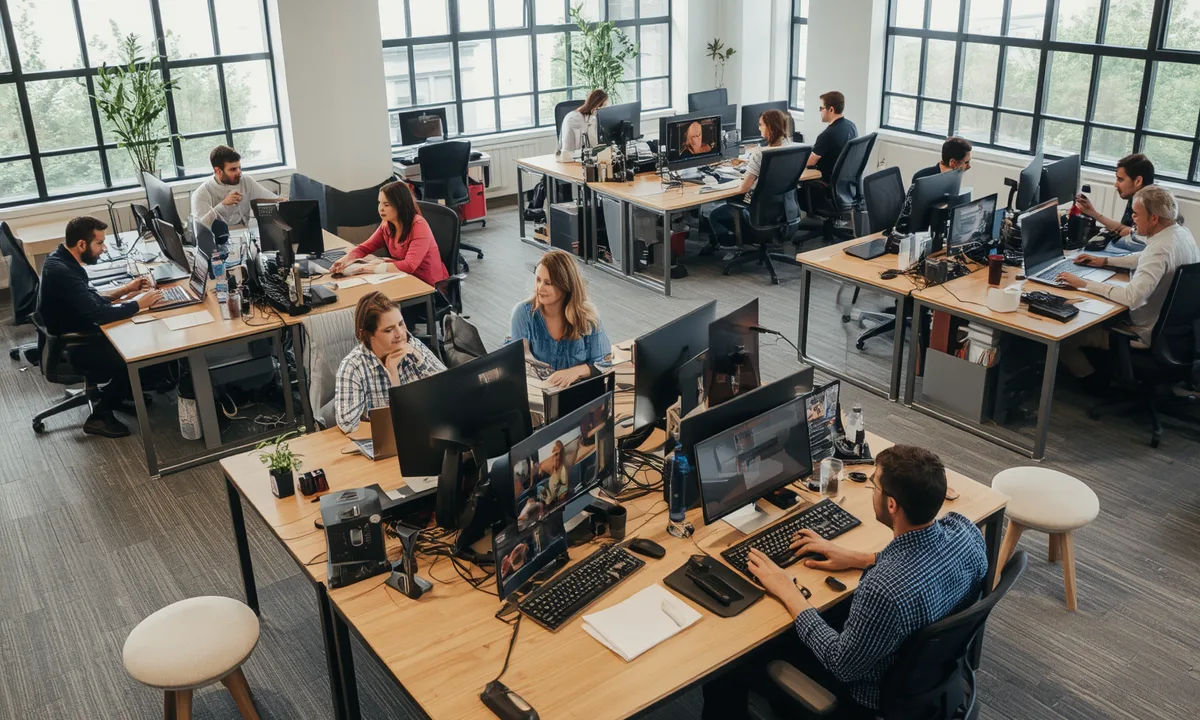
Managed IT services for retail help stores maintain reliable technology, strengthen security, reduce downtime, and support both customer-facing and back-office operations. As retailers increasingly depend on connected systems such as point-of-sale (POS) terminals, inventory platforms, payment systems, employee devices, and cloud applications, managing technology has become a critical part of day-to-day business operations.
For many retailers, the challenge is not simply fixing problems when they occur. It is ensuring systems remain available, secure, and updated before issues impact sales, customer experience, or employee productivity. Managed IT services provide ongoing monitoring, support, maintenance, and security that help retailers operate more efficiently while reducing the burden on internal teams.
What Are Managed IT Services for Retail?
Managed IT services for retail are outsourced technology services that help retailers monitor, maintain, secure, and support their IT infrastructure. This typically includes endpoint devices, store networks, POS systems, inventory management tools, payment-connected technology, cloud applications, printers, scanners, and employee workstations.
Unlike many office environments, retail operations rely heavily on real-time technology. A malfunctioning POS terminal can prevent transactions from being processed. Network outages can disrupt inventory synchronization and digital payment systems. Device failures can affect customer service and operational efficiency.
Retailers must also protect customer and payment data. The standards maintained by the PCI Security Standards Council provide guidance for organizations that store, process, or transmit payment card information.
Managed IT services help retailers move beyond reactive support by proactively monitoring systems, applying updates, addressing security risks, and resolving issues before they become major disruptions.
Why Do Retail Businesses Need Managed IT Services?
Retail businesses depend on technology more than ever. Even small retailers often use a combination of POS systems, ecommerce platforms, cloud applications, employee devices, inventory software, payment processors, and customer Wi-Fi networks.
As technology grows, so does complexity. A retailer may operate dozens or hundreds of devices across multiple locations, each requiring updates, security controls, troubleshooting, and ongoing support.
The Federal Trade Commission recommends maintaining an inventory of hardware, software, data, and services, including laptops, smartphones, and point-of-sale systems. Keeping track of these assets manually becomes increasingly difficult as retail environments expand.
Managed IT services provide structure and visibility. Instead of relying on store managers or non-technical staff to troubleshoot issues, retailers gain access to centralized monitoring, support processes, and security management that help maintain operational consistency.
What Challenges Do Managed IT Services Solve for Retailers?
Managed IT services address many of the most common technology challenges retailers face, including downtime, cybersecurity risks, device management issues, inconsistent support, and limited visibility into distributed systems.
Downtime is often the most immediate concern. When checkout systems become unavailable, retailers may lose sales, frustrate customers, and create operational bottlenecks. Inventory systems, payment processing platforms, and customer service tools can also be affected by technology disruptions.
Retailers must also manage growing cybersecurity risks. Modern retail environments contain valuable customer information, employee data, payment-related systems, and connected devices that can become targets for cybercriminals.
According to the Verizon Data Breach Investigations Report, software vulnerabilities continue to play a significant role in security incidents, highlighting the importance of timely patch management and endpoint visibility.
Managed IT services help reduce these risks by establishing consistent processes for monitoring devices, applying updates, managing access controls, and responding to potential threats.
What Systems Are Typically Covered by Managed IT Services?
Retail managed IT services can support nearly every technology component within a store environment.
Common systems include:
- POS terminals and checkout devices
- Desktop and laptop computers
- Mobile devices and tablets
- Inventory management systems
- Barcode scanners
- Receipt and label printers
- Store Wi-Fi and networking equipment
- Cloud applications
- Payment-connected devices
- Security software
- Backup systems
- Employee productivity tools
Retailers often operate a mix of physical and digital systems that must work together seamlessly. A network issue may affect POS systems, inventory visibility, online order fulfillment, and payment processing simultaneously.
The U.S. Chamber of Commerce notes that modern retail operations increasingly rely on interconnected POS hardware and software to manage transactions and customer interactions efficiently.
Managed IT services help ensure these systems remain available, secure, and properly maintained across every location.
How Do Managed IT Services Improve Retail Cybersecurity?
Cybersecurity is one of the primary reasons retailers invest in managed IT services.
Retail organizations face threats ranging from phishing attacks and credential theft to ransomware, software vulnerabilities, and unauthorized access to customer information. Even a single compromised device can create operational and reputational risks.
Managed IT services improve cybersecurity through:
- Endpoint monitoring
- Patch management
- User access controls
- Device inventory management
- Security alerting
- Backup monitoring
- Remote troubleshooting
- Multi-factor authentication support
- Security policy enforcement
- Incident response support
A strong security posture starts with visibility. Retailers must know what devices exist, where they are located, who uses them, and whether they are receiving updates.
The cybersecurity guidance developed by NIST emphasizes practical security practices that even smaller organizations can implement to reduce risk and improve resilience.
Managed IT services help turn those practices into repeatable operational processes that can be maintained across one location or hundreds.
How Do Managed IT Services Reduce Retail Downtime?
Downtime affects more than technology. It affects revenue, customer satisfaction, employee productivity, and business continuity.
Managed IT services reduce downtime by proactively monitoring systems and identifying issues before they escalate into larger disruptions.
For example, a device that begins experiencing performance issues may be flagged before it fails completely. A network problem can be identified and investigated before it impacts multiple store systems. Software updates can be deployed during planned maintenance windows rather than during peak business hours.
Remote support capabilities also improve response times. Many issues can be diagnosed and resolved without waiting for an on-site visit, helping stores return to normal operations faster.
This proactive approach is particularly valuable for retailers operating across multiple locations where IT teams cannot physically be present at every store.
What Should Retailers Look for in a Managed IT Services Provider?
Not all managed IT services are designed for retail environments. Retailers should evaluate providers based on their ability to support distributed operations, customer-facing systems, and business-critical technology.
Important capabilities include:
- Endpoint monitoring and management
- Remote support
- Patch management
- Device inventory tracking
- Security monitoring
- Backup management
- Network visibility
- Reporting and analytics
- Automation capabilities
- Multi-location support
Retailers should also look for providers that offer clear communication, documented processes, and responsive support. Technology issues often involve multiple vendors, including payment processors, POS providers, internet service providers, and software vendors.
A managed IT partner should be able to coordinate effectively across those relationships while helping retailers maintain operational continuity.
How Managed IT Services Support Multi-Location Retail Operations
Technology management becomes significantly more challenging as retailers expand into multiple locations.
Every new store adds additional endpoints, users, network devices, and support requirements. Without centralized management, IT environments can become inconsistent and difficult to maintain.
Managed IT services help standardize technology across locations by providing centralized visibility into devices, software versions, security policies, and operational health.
Benefits for multi-location retailers include:
- Consistent device configurations
- Centralized monitoring
- Faster troubleshooting
- Standardized security controls
- Improved reporting
- Simplified software deployment
- Better asset visibility
This consistency reduces operational complexity and helps retailers scale more effectively as they grow.
Where Does Level Fit Into Retail IT Management?
Level can support retail organizations that need a streamlined approach to endpoint management, remote access, automation, and monitoring.
Retail environments often contain devices spread across multiple locations. Maintaining visibility into those systems can become difficult without centralized management tools.
Using Level, retail IT teams can remotely access devices, monitor endpoint health, automate routine administrative tasks, and maintain visibility across distributed environments.
This can help reduce the need for store personnel to troubleshoot technical issues while enabling IT teams to support locations more efficiently.
For retailers seeking to improve operational consistency and endpoint management without introducing unnecessary complexity, Level can serve as a valuable part of their IT strategy.
Are Managed IT Services Worth It for Small Retailers?
Many small retailers assume managed IT services are only necessary for large organizations. In reality, smaller retailers often gain significant value because they typically have limited internal IT resources while remaining heavily dependent on technology.
Even a single-store operation may rely on:
- POS systems
- Internet connectivity
- Payment processing
- Inventory software
- Employee devices
- Cloud applications
A failure in any of these systems can directly impact sales and customer experience.
Managed IT services help small retailers gain access to professional support, monitoring, security expertise, and operational best practices without hiring a dedicated IT department.
As the business grows, managed IT services also create a foundation that supports expansion into additional locations.
How Retailers Can Get Started With Managed IT Services
The first step is understanding the current technology environment.
Retailers should identify all devices, software platforms, network equipment, and business-critical systems currently in use. This inventory provides a baseline for evaluating risks, support needs, and operational priorities.
Next, retailers should assess:
- Current support processes
- Device management practices
- Security controls
- Backup procedures
- Access management policies
- Patch management workflows
From there, they can identify gaps and determine where managed IT services can provide the greatest value.
The most successful implementations focus first on visibility, reliability, and security. Once those fundamentals are established, retailers can expand into automation, reporting, and long-term optimization initiatives.
FAQ
What are managed IT services for retail?
Managed IT services for retail are outsourced technology services that help retailers manage, monitor, maintain, and secure systems such as POS devices, networks, computers, inventory platforms, and employee endpoints.
Why are managed IT services important for retailers?
They help reduce downtime, improve cybersecurity, streamline device management, and ensure critical retail systems remain operational and secure.
Can managed IT services support POS systems?
Yes. Managed IT services commonly support POS terminals, connected devices, network infrastructure, software updates, and troubleshooting processes that help keep retail operations running smoothly.
Do managed IT services help with cybersecurity?
Yes. Managed IT services often include endpoint monitoring, patch management, access controls, security alerting, backup monitoring, and incident response support.
Are managed IT services suitable for small retail businesses?
Absolutely. Small retailers frequently benefit from managed IT services because they gain access to professional IT expertise without the cost of building an internal IT department.
What is the biggest advantage of managed IT services for retail?
The biggest advantage is improved operational reliability. Retailers can reduce downtime, improve security, maintain visibility into their technology environment, and support customers more effectively.