Talk to devices from your terminal
lvl lists devices, runs scripts, and applies automations. You bring the model. Level does not host it.
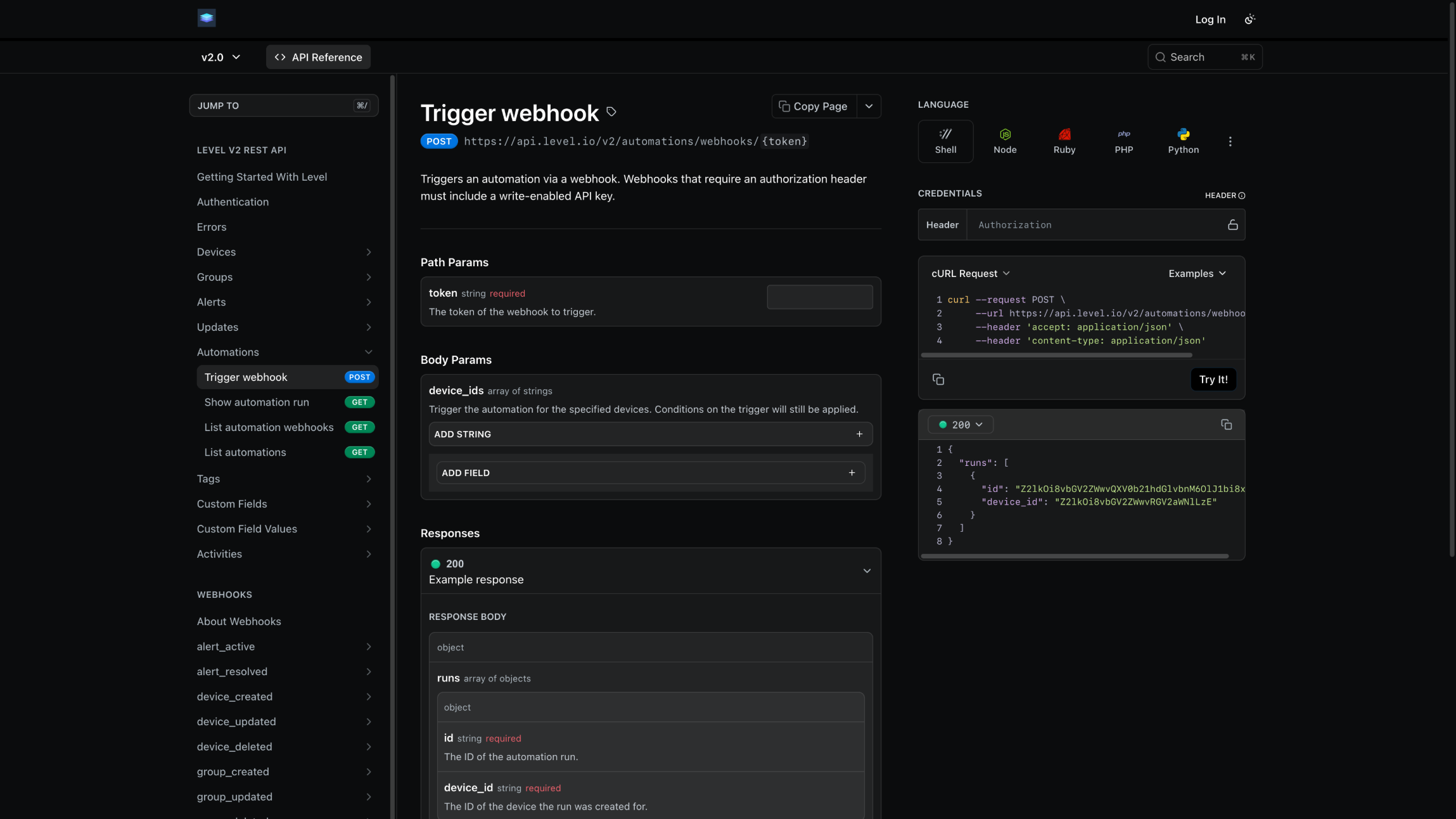
Full REST API, event-driven automation, and Linux support that actually works.
Bring your own AI against the fleet you already manage.
lvl lists devices, runs scripts, and applies automations. You bring the model. Level does not host it.
“Finally, an RMM that doesn't feel like it was designed in 2005. The UI is clean, the API is real, and patching actually works reliably.”
cloudops_mike
r/sysadmin
The work that keeps fleets healthy is the work no tool wants to own.
Hand-fixed servers and skipped package updates slowly pull every box away from the baseline you set.
SSH keys, jump boxes, and shared logins accrete across environments with no single place to govern them.
Monitoring tells you something broke, then leaves the actual fix sitting in your lap at 2 a.m.
Open the page for the job in front of you.
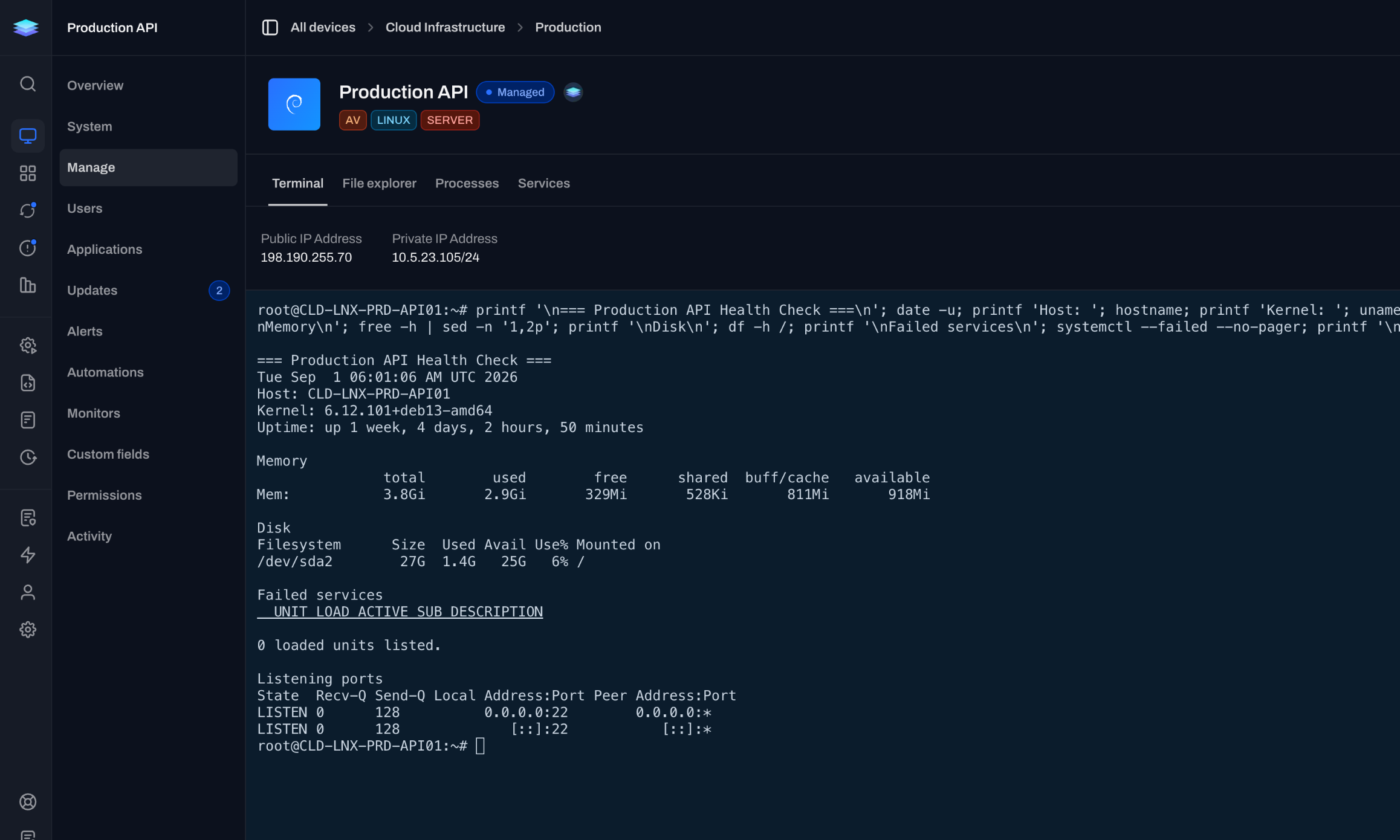
The session opens in the browser. No jump box.
Event-driven, monitor-driven, or scheduled. Infrastructure work starts with the signal, not the next scan.
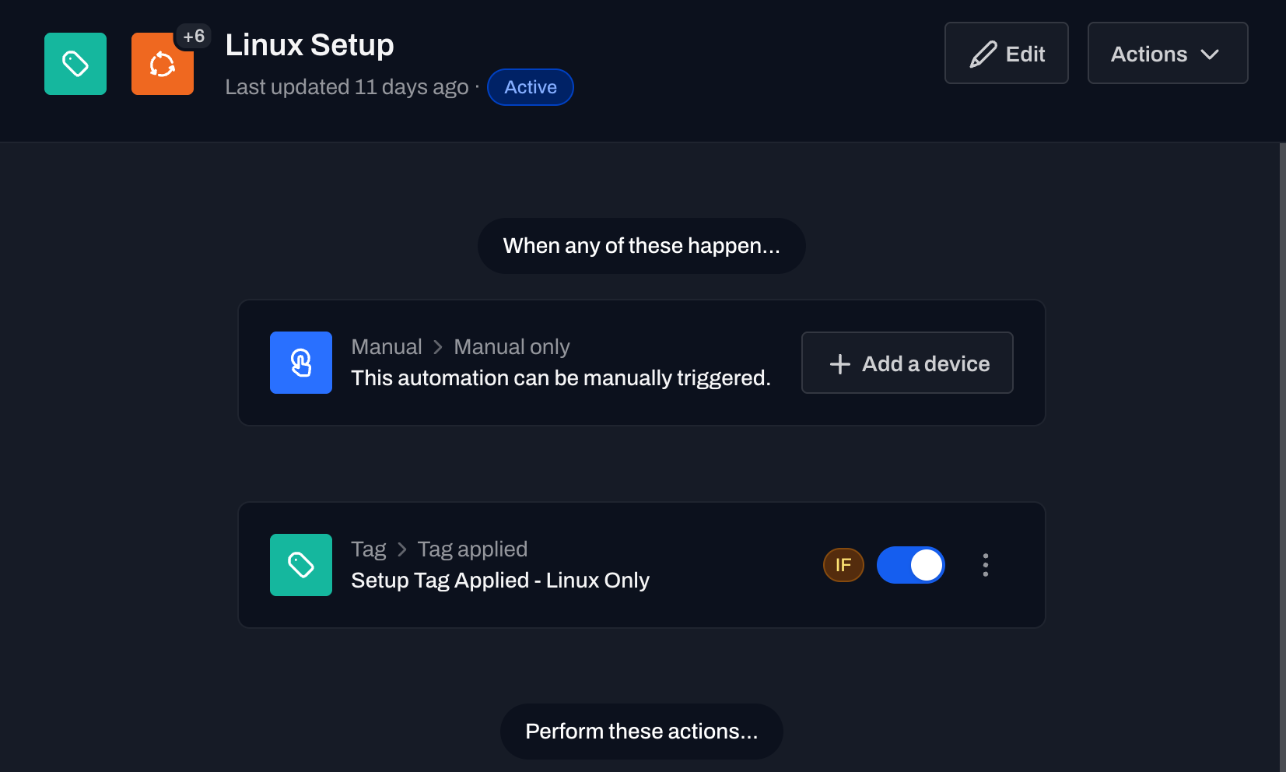
Enrollment, group membership, and tag changes can apply the right baseline before configuration starts to drift.
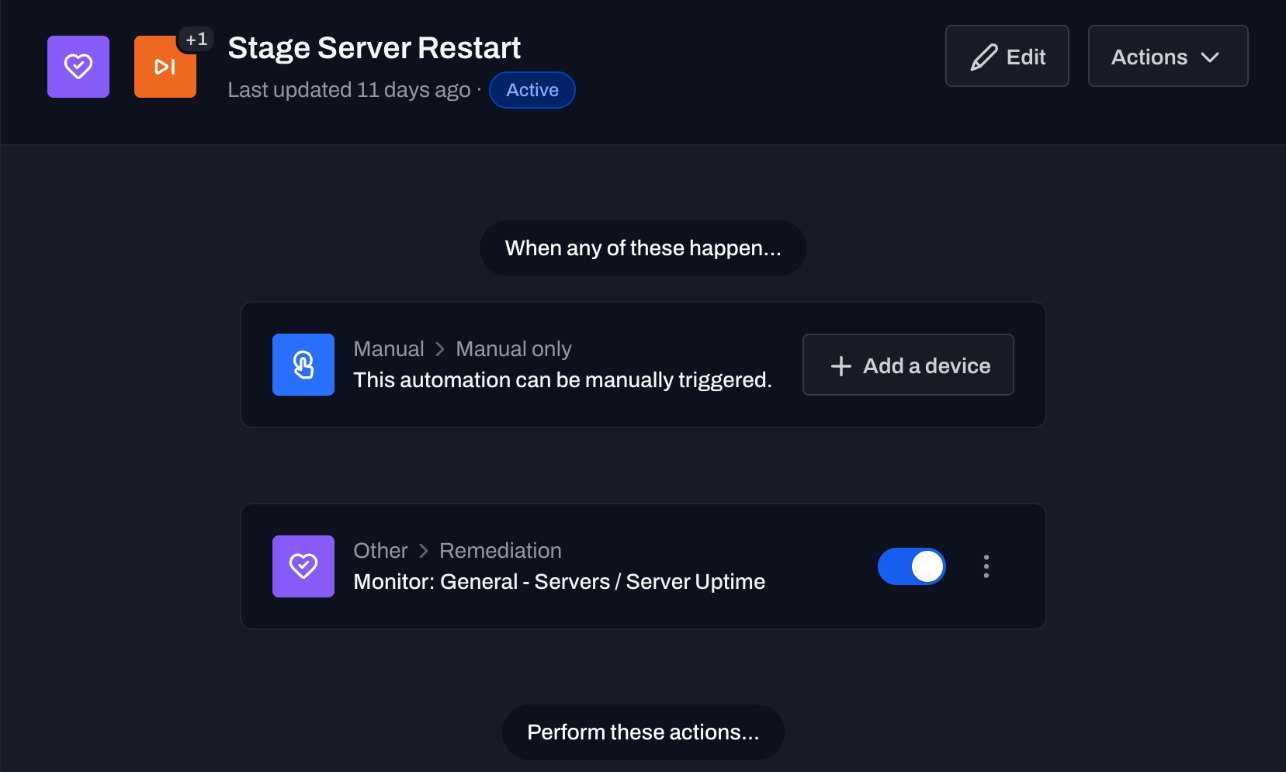
Failed services, resource thresholds, and script checks can launch remediation or escalate with the host context attached.
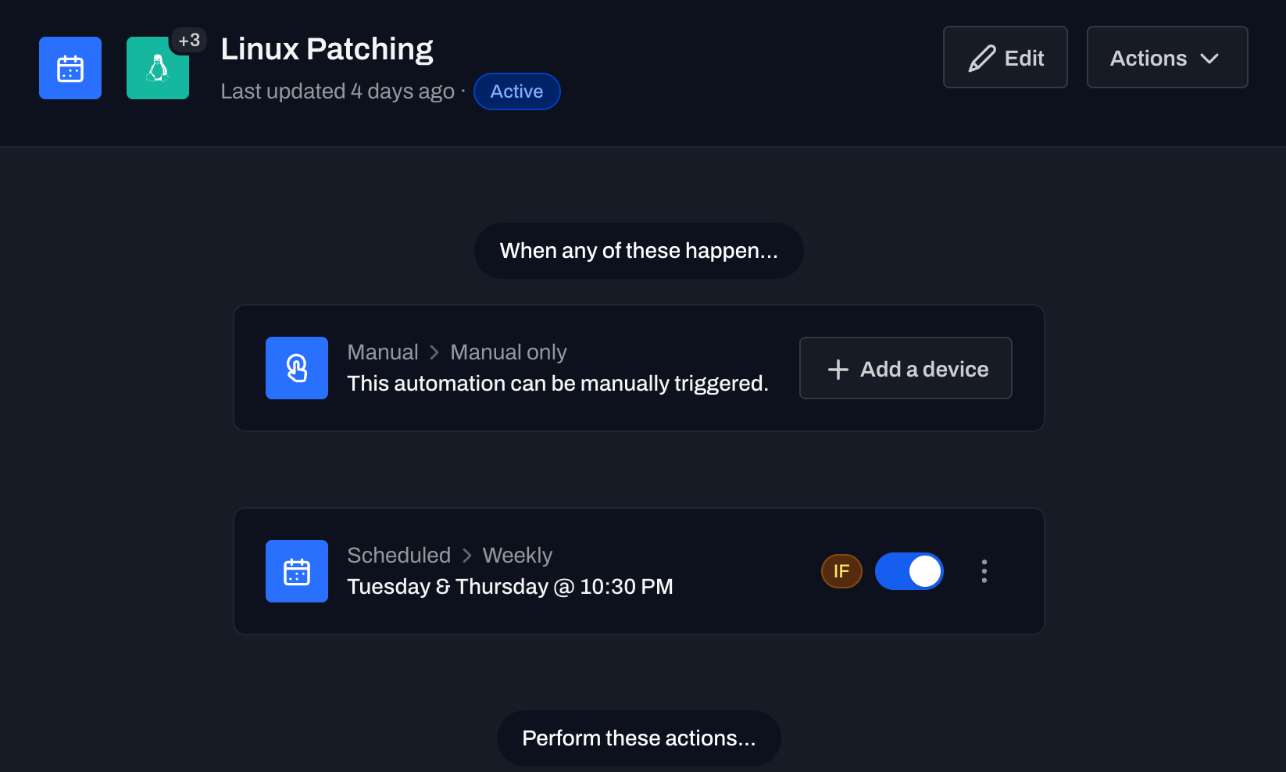
Schedule updates, configuration audits, and recurring scripts by environment, maintenance window, or server group.
Engineers share what happens after they install it.
“We’re using it for Linux machines since our primary RMM doesn’t have Linux support right now. It’s been great for us so far, and their team has been very responsive on support requests and feature rollouts.”
“Level is such a breath of fresh air in the RMM space. The GUI looks clean, intuitive, modern and is very responsive.”
“What they do well is the automation module, monitoring, and scripting. Everything works in real time, without delay.”
“Our transition to a fully remote workspace was streamlined thanks to Level. This platform excellently meets our needs for remote management and endpoint monitoring. Its straightforward installation and user-friendly interface are complemented by the exceptional support. Discovering Level has been a pivotal moment for our remote operations.”
“We switched to Level in February from another RMM and are super happy. The whole platform is modern, fast, offers a ton of advanced features, and is very actively developed. Monitoring is super flexible because it allows us to use our own scripts as monitors and do things based on the results. The API is quite advanced and is extended constantly.”
“Level has brought us the multi-OS management software we need at a reasonable price. Its modern UI makes it easy to work with systems individually and in bulk.”
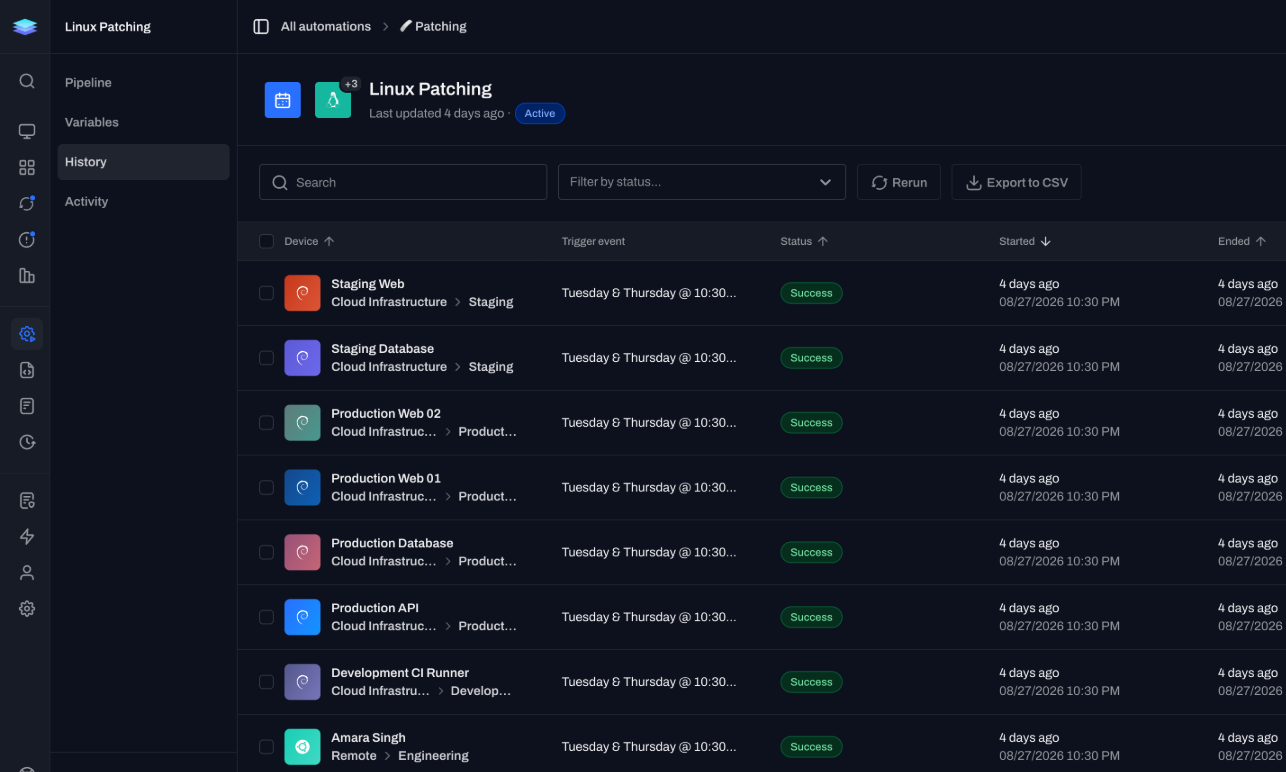
Watch output live, then keep the per-device log.
Every automation run, script, and remote session is logged with full context. Failure alerts arrive with the stack context to act on them.
Where Level fits, what it runs on, and what it logs.
No. Level is an operational control plane for endpoints and servers. It complements observability, CI/CD, and infrastructure-as-code rather than replacing them.
A single agent installs via script across Linux, Windows, and macOS. Enroll servers by environment and group them with tags.
Debian, Ubuntu, Arch, Fedora, Manjaro, and Mint run the same agent and the same features as Windows and macOS.
You target them by environment, group, or tag, gate them behind approval, and review a full per-device log of every run.
Every automation run, script, and remote session is recorded with full context, with real-time output and per-device logs for fleet-wide operations.
Yes, anywhere the agent runs. Level manages the servers and endpoints themselves, not the cloud control plane.
Manage mixed-OS servers, connect alerts to remediation, and keep every run observable from one place. Start with 10 devices free.