
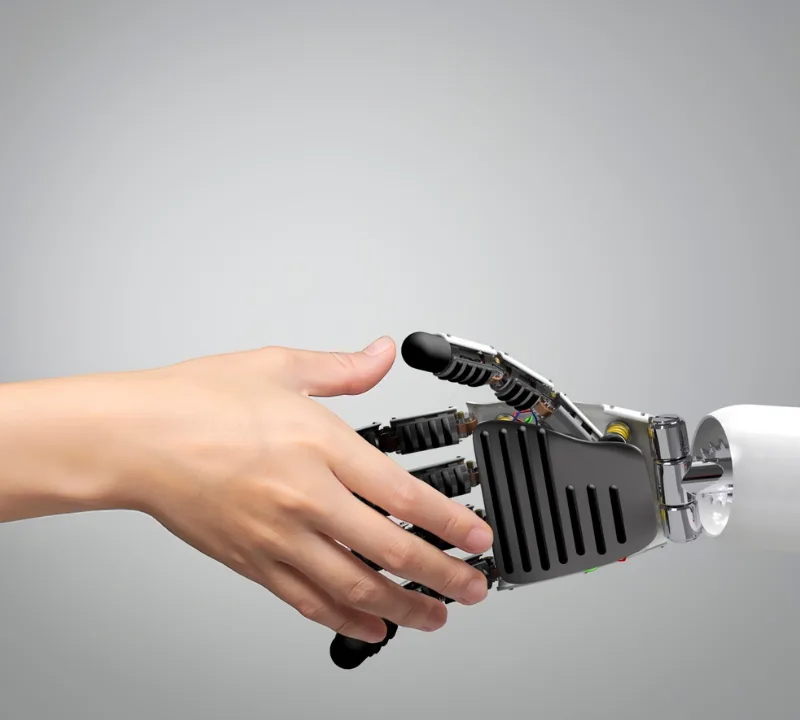
“AI-proof” does not mean immune to AI. It means careers that become more valuable because of AI. These are roles where demand grows as automation expands, and where work depends heavily on human judgment, leadership, accountability, and real world context.
Across workforce research and industry leadership statements, the message is consistent. AI will automate tasks, not entire roles. Work will change faster than it disappears.
For IT teams and managed service providers, this shift is already visible. Automation is reducing repetitive work, while expectations for strategy, security, architecture, and governance continue to rise.
This article explains which IT careers are becoming more valuable because of AI, and how professionals can move toward them.
The AI shift is about job evolution, not job elimination
The biggest misconception about AI is that it will replace entire professions. In reality, most jobs contain a mix of routine and non routine tasks. AI is best at the routine parts.
As automation expands, the nature of work shifts upward. Repetitive tasks shrink. Decision making, system design, and accountability grow.
Industry leaders repeatedly emphasize this shift.
NVIDIA CEO Jensen Huang has said that “AI will impact every industry”. Many executives expect workforce size to stay stable or even grow, but with different skill requirements. Some leaders believe AI will eliminate repetitive work and unlock creativity and innovation inside organizations.
The common thread is clear. Work is transforming faster than ever, and people who adapt early will benefit the most.
Why AI increases demand for high-skill IT roles
AI creates three major changes in the workplace.
1. Productivity increases
AI tools accelerate coding, documentation, troubleshooting, and analysis. This means teams can do more work with the same number of people.
2. Complexity increases
As automation grows, systems become more complex. More integrations, more data, more security risks, and more governance requirements appear.
3. Accountability increases
Organizations still need humans to own decisions, risk, and outcomes.
These forces push demand toward higher level work.
The traits of AI-resilient IT careers
Roles that grow because of AI typically include:
- Decision making and risk ownership
- System architecture and trade-offs
- Leadership and cross team collaboration
- Governance and compliance responsibilities
- Real world operational context
These traits appear across the most resilient career paths.
1. Cybersecurity and threat defense
AI is accelerating cyber threats while also improving defense capabilities. Every new automation wave increases the attack surface.
Security demand continues to outpace supply worldwide.
Key roles:
- Security engineer
- Cloud security engineer
- Incident responder
- Threat hunter
- Security architect
AI helps detect anomalies and automate triage. Humans decide response strategies, risk tolerance, and business impact.
Security careers are expected to grow for years because digital risk continues to expand.
2. Cloud and platform architecture
Most organizations are still early in their cloud and platform maturity journey. AI increases demand for scalable infrastructure, data pipelines, and reliable platforms.
Key roles:
- Cloud architect
- Platform engineer
- Site reliability engineer
- DevOps architect
These professionals design systems and make trade-offs between cost, performance, reliability, and security. AI can assist design, but cannot own accountability.
3. AI, data, and MLOps engineering
The biggest AI job growth comes from building and operating AI systems.
Organizations need professionals who can:
- Build data pipelines
- Deploy models into production
- Monitor performance and drift
- Ensure governance and reliability
Key roles:
- Data engineer
- AI engineer
- Machine learning engineer
- MLOps engineer
- AI platform engineer
AI needs people to build, maintain, and govern it.
4. IT leadership and strategy
Leadership roles remain among the least automatable.
These roles require:
- Budget ownership
- Long term planning
- Organizational alignment
- Risk management
- Vendor and stakeholder coordination
Key roles:
- IT manager
- Director of IT
- CTO
- Enterprise architect
AI can provide recommendations. Humans make decisions and accept responsibility.
5. Consulting and solutions architecture
Organizations need professionals who translate business problems into technical solutions.
Key roles:
- Solutions architect
- Technical consultant
- Pre-sales engineer
- Digital transformation consultant
These roles require communication, trust, negotiation, and customization. These are deeply human skills.
6. Robotics, IoT, and edge infrastructure
Work connected to the physical world is harder to automate completely.
Key roles:
- IoT engineer
- Robotics engineer
- Edge computing engineer
- Industrial IT engineer
Real environments introduce safety, reliability, and operational challenges that require human oversight.
7. Governance, compliance, and risk
As AI adoption grows, regulation and oversight grow with it.
Key roles:
- GRC specialist
- Compliance engineer
- Privacy engineer
- Risk analyst
Organizations need professionals who can ensure technology aligns with regulations and internal policies.
Roles most affected by automation
Some roles will still exist but will change significantly:
- Basic helpdesk and tier 1 support
- Manual QA testing
- Routine scripting and repetitive coding
- Basic system administration
These roles are evolving toward automation and engineering work.
The safest path is moving up the stack.
The career ladder in the AI era
A simple way to understand the shift:
Operational work → Engineering → Architecture → Leadership
AI replaces repetitive tasks and increases demand for higher level work.
A practical roadmap to become AI-resilient
Step 1. Become AI-augmented
Learn to use AI tools daily for:
- Troubleshooting
- Documentation
- Research
- Scripting assistance
This is becoming a baseline skill.
Step 2. Learn automation first
Automation is the bridge between traditional IT and AI-driven IT.
Focus on:
- Python, PowerShell, or Bash
- APIs and integrations
- Infrastructure as code
- Workflow automation
Step 3. Choose a specialization
Common paths include:
- Cloud and platform engineering
- Security
- Data and AI
- Leadership and strategy
Step 4. Build real projects
Proof of skills matters.
Examples:
- Automation scripts
- Home labs
- Dashboards
- Infrastructure projects
Projects turn learning into experience.
What this means for IT leaders
The biggest risk is not AI itself. It is the gap between technology and workforce skills.
Leaders must create environments where teams can grow into higher value roles.
That means:
- Reducing repetitive workload
- Protecting learning time
- Measuring improvement work
- Encouraging automation initiatives
When teams are stuck in operational work, career growth slows and burnout rises.
How better IT management supports career growth
Career resilience becomes easier when operational workload decreases.
Automating endpoint management, patching, monitoring, and onboarding creates space for strategic work and skill development.
Platforms like Level help IT teams reduce repetitive workload so professionals can focus on higher value projects and long term career growth.
The big takeaway
AI is not removing IT careers. It is raising the value of expertise, decision making, and accountability.
The most resilient IT careers are those that combine technical depth with human judgment.
Professionals who move toward engineering, architecture, leadership, and governance will benefit the most from the AI era.