
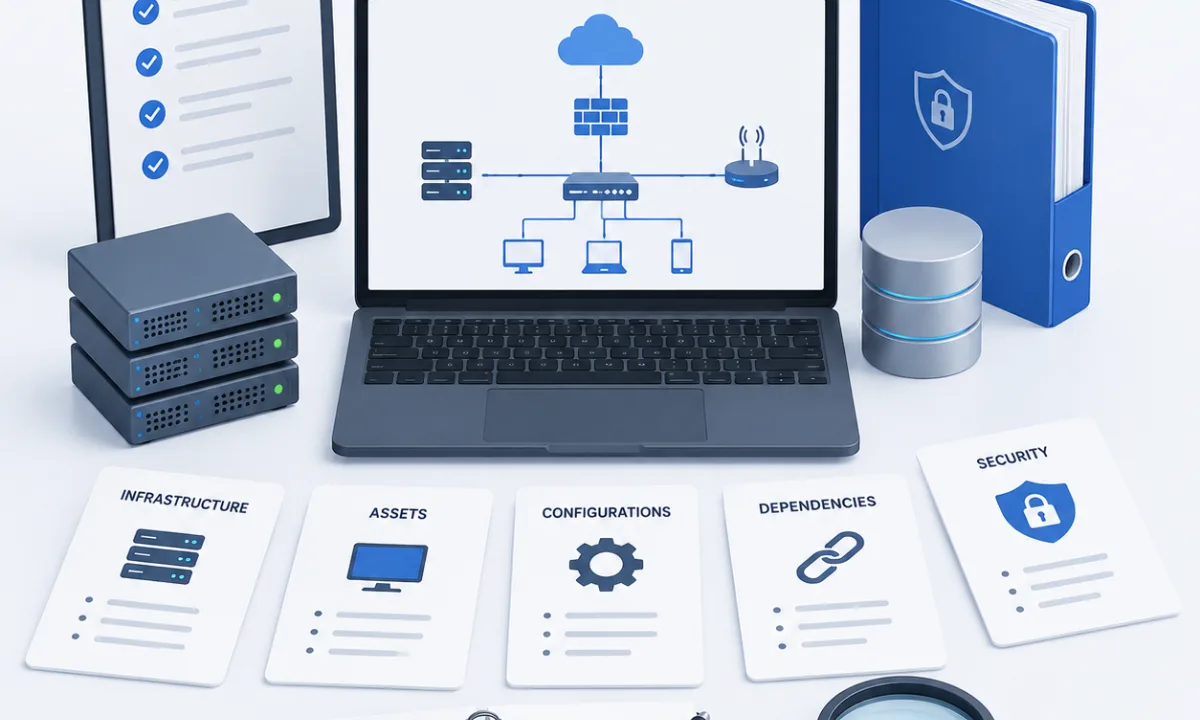
Network documentation is the process of maintaining accurate records of your network's topology, devices, IP addressing, configurations, dependencies, and operational procedures. When kept current, it improves troubleshooting, change management, security, and disaster recovery. When neglected, it can slow incident response, complicate infrastructure changes, and leave IT teams working with outdated information.
Rather than treating documentation as a one-time project, organizations should maintain it as a living operational resource. Guidance from government agencies, standards bodies, and vendor-neutral organizations consistently emphasizes that accurate documentation supports day-to-day operations as well as long-term resilience.
Why Network Documentation Matters
Modern networks span on-premises infrastructure, cloud platforms, remote users, branch offices, and third-party services. As environments become more complex, understanding how systems connect and depend on one another becomes increasingly important.
The Cybersecurity and Infrastructure Security Agency (CISA) StopRansomware Guide recommends maintaining comprehensive network diagrams that include major networks, IP addressing schemes, topology, system interdependencies, cloud connections, and third-party or managed service provider access. CISA also recommends securely storing this documentation and maintaining offline copies so it remains available during cyber incidents such as ransomware attacks.
Maintaining accurate documentation can help IT teams:
- Troubleshoot issues more efficiently
- Understand relationships between systems
- Support change management
- Maintain accurate asset inventories
- Improve operational consistency
- Support disaster recovery planning
Instead of relying solely on institutional knowledge, organizations can maintain a shared reference that remains useful as infrastructure and personnel change over time.
What Should Network Documentation Include?
A network diagram is an important starting point, but effective documentation extends well beyond topology alone.
The CIS Critical Security Controls v8.1 recommend establishing and maintaining architecture diagrams or equivalent network documentation that is reviewed at least annually and whenever significant enterprise changes occur. The same guidance also recommends documenting secure configurations for network infrastructure.
A comprehensive documentation set should include:
- Physical network diagrams
- Logical network diagrams
- IP addressing plans
- VLANs and subnet allocations
- Routing architecture
- Firewall zones and network boundaries
- WAN and internet connectivity
- VPN infrastructure
- Wireless networks
- Cloud networking
- Network device roles
- Administrative ownership
- Configuration baselines
- Critical service dependencies
- Change history
Together, these records provide a more complete view of the network than diagrams alone.
Maintain an Accurate Asset Inventory
Documentation is only valuable if it reflects the systems actually operating within the environment.
CIS Control 1: Inventory and Control of Enterprise Assets recommends maintaining an inventory of enterprise assets across physical, virtual, remote, and cloud environments. Relevant inventory information may include hostnames, IP addresses, hardware addresses, ownership, departments, and authorization status.
Similarly, the UK National Cyber Security Centre (NCSC) Asset Management guidance recommends maintaining information about hardware, software, cloud resources, services, online accounts, and other organizational assets rather than relying on a single inventory source.
Maintaining current inventories helps organizations identify unmanaged or unauthorized assets more effectively while supporting operational visibility.
Document Relationships and Dependencies
Knowing which devices exist is only part of the picture. Effective documentation should also explain how systems interact.
For example, documenting that an application server depends on a particular database, communicates through specific firewall policies, and authenticates through centralized identity services provides valuable operational context during troubleshooting and recovery.
The NCSC Cyber Assessment Framework Principle A3: Asset Management recommends documenting dependencies between IT assets, operational technology, utilities, external services, and critical business functions.
Likewise, the CISA Cyber Resilience Review Asset Management Guide recommends documenting asset ownership, supported services, relationships, and dependencies to strengthen organizational resilience.
Keep Configuration Documentation Current
Network documentation should evolve whenever infrastructure changes.
The NIST Special Publication 800-128: Guide for Security-Focused Configuration Management of Information Systems recommends establishing approved configuration baselines, documenting configuration settings, recording authorized changes, monitoring for unauthorized modifications, and assigning configuration management responsibilities.
Useful configuration records include:
- Approved baseline configurations
- Standard device templates
- Naming conventions
- Configuration versions
- Change history
- Rollback procedures
Updating documentation as part of every approved change helps keep operational records aligned with production systems.
Review and Validate Documentation Regularly
Documentation naturally becomes less accurate as networks evolve.
The CIS Critical Security Controls v8.1 recommend reviewing network architecture documentation at least annually and after significant infrastructure changes.
The CISA Binding Operational Directive 23-01 requires U.S. federal civilian agencies to improve asset visibility by reconciling discovered assets with official inventories. Although the directive applies specifically to federal agencies, validating documentation against the live environment is a useful practice for organizations of any size.
The NIST Special Publication 800-82 Revision 3: Guide to Operational Technology Security also notes that automated discovery tools may not identify every component, particularly in complex or specialized environments. While the publication focuses on operational technology, its guidance on validating inventories through multiple information sources is broadly applicable to enterprise documentation practices.
Protect Documentation as a Critical Asset
Network documentation often contains sensitive operational information and should be protected accordingly.
The CISA StopRansomware Guide recommends securely storing documentation and maintaining offline or physical copies that remain available during ransomware incidents or other disruptive events.
Organizations should also establish document ownership, maintain revision history, and restrict access to authorized personnel. These practices help ensure documentation remains accurate, recoverable, and trustworthy over time.
Standardize Configuration Data Where Possible
As environments grow, manually maintaining documentation becomes increasingly difficult.
The IETF Network Configuration Protocol (RFC 6241) and The YANG 1.1 Data Modeling Language (RFC 7950) define standardized methods for retrieving, managing, and modeling network configuration data. These standards support more consistent and machine-readable configuration records while reducing reliance on manually maintained documentation.
The IETF Network Management Datastore Architecture (RFC 8342) distinguishes intended configuration from operational state, helping organizations identify configuration drift and differences between documented settings and actual device behavior.
Network Documentation Checklist
An effective documentation process should include:
- Current physical and logical network diagrams
- Complete asset inventory
- IP addressing and subnet documentation
- VLAN assignments
- Routing and firewall information
- VPN and remote access documentation
- Configuration baselines
- Device ownership
- Critical system dependencies
- Version history
- Review dates
- Change records
- Backup and recovery documentation
Keeping this information current helps maintain operational awareness as infrastructure evolves.
Simplify Documentation Maintenance
Maintaining documentation becomes more challenging as networks expand across multiple locations, cloud platforms, and remote endpoints.
A remote monitoring and management platform like Level can help IT teams maintain visibility into devices and infrastructure while supporting operational workflows that make documentation updates easier to manage alongside everyday administration. Combined with disciplined documentation practices and structured change management, centralized visibility can help organizations keep network documentation accurate over time.
Network documentation is most effective when treated as an ongoing operational process rather than a static deliverable. Accurate records help IT teams understand infrastructure, support operational decision-making, respond to incidents more effectively, and manage change with greater confidence.
Frequently Asked Questions
What is network documentation?
Network documentation is a collection of records describing a network's topology, devices, configurations, IP addressing, dependencies, operational procedures, and supporting information used to manage and maintain the environment.
How often should network documentation be updated?
The CIS Critical Security Controls recommend reviewing architecture documentation at least annually and whenever significant infrastructure changes occur.
What is the difference between a network diagram and network documentation?
A network diagram illustrates how devices and networks connect. Network documentation includes diagrams as well as inventories, configurations, ownership, dependencies, operational procedures, and change history.
Who should own network documentation?
Organizations should assign ownership to individuals or teams responsible for maintaining documentation as infrastructure changes so records remain accurate and current.