
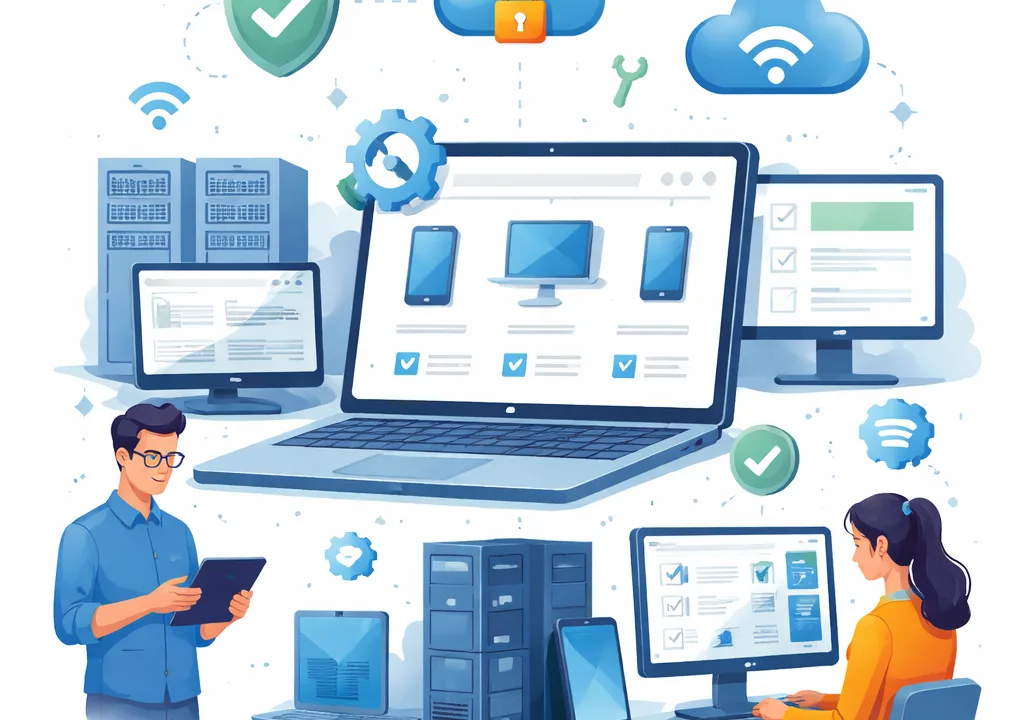
Endpoint management in IT is the process of monitoring, securing, and maintaining devices such as laptops, desktops, servers, and mobile devices within a network. It enables IT teams to control systems remotely, enforce policies, deploy updates, and automate routine tasks from a centralized platform.
What is endpoint management?
Endpoint management is the practice of managing all devices connected to an organization’s network. These devices, called endpoints, include employee laptops, desktops, servers, mobile devices, and other network-connected systems.
It ensures that every endpoint is properly configured, updated, secured, and monitored throughout its lifecycle.
What does endpoint management do?
Endpoint management enables IT teams to:
- Monitor device health and performance
- Deploy software and updates remotely
- Enforce security policies and configurations
- Control user access and permissions
- Detect and respond to threats
It acts as a centralized control layer for all devices in an organization.
How does endpoint management work?
Endpoint management works by connecting devices to a centralized platform, typically through an installed agent or native system integration.
Once connected:
- Devices send system data such as performance and alerts
- IT teams can push updates, scripts, and configurations
- Automation handles routine tasks like patching and maintenance
- Alerts notify teams of issues or risks in real time
This allows full visibility and control without needing physical access to devices.
Why is endpoint management important?
Endpoint management is critical because endpoints are one of the most common entry points for security risks and operational failures.
It helps organizations:
- Reduce security risks through consistent policy enforcement
- Maintain compliance with standards and regulations
- Minimize downtime through proactive monitoring
- Scale IT operations without increasing manual workload
Without it, IT teams lose visibility and control over their environment.
What types of endpoints are managed?
Common endpoints include:
- Laptops and desktops
- Servers
- Mobile devices
- Virtual machines
- Network-connected systems
Modern environments often include both on-site and remote endpoints.
What tools are used for endpoint management?
Endpoint management is typically handled through centralized platforms designed to monitor, automate, and secure devices.
These tools usually include:
- Remote monitoring capabilities
- Patch management systems
- Script automation
- Asset tracking
- Policy enforcement features
They allow IT teams to manage large environments efficiently.
How do IT teams scale endpoint management?
Scaling endpoint management relies on automation and standardization.
Common approaches include:
- Automating patching and maintenance
- Using predefined policies and templates
- Grouping devices by role or department
- Monitoring systems proactively instead of reactively
This reduces manual work and improves consistency.
What is the difference between endpoint management and device management?
Endpoint management is broader than device management.
- Device management focuses on controlling individual devices
- Endpoint management includes monitoring, automation, security, and lifecycle control
It provides a more complete approach to managing IT environments.
What are common challenges in endpoint management?
IT teams often face:
- Managing remote and distributed devices
- Keeping systems updated without disruption
- Maintaining consistent security across endpoints
- Handling large volumes of alerts and data
These challenges are typically addressed through automation and centralized platforms.
Use cases of endpoint management
Endpoint management is used in:
- Supporting remote workforces
- Enforcing security and compliance policies
- Automating IT operations
- Managing multi-site environments
- Running managed IT services
It is essential for organizations managing multiple devices.
FAQ
What is an endpoint in IT?
An endpoint is any device connected to a network, such as a laptop, desktop, server, or mobile device.
Is endpoint management only for large companies?
No, small and mid-sized organizations also benefit from endpoint management as they scale.
Can endpoint management be automated?
Yes, most modern platforms automate tasks like patching, monitoring, and maintenance.
Does endpoint management include security?
Yes, it includes enforcing security policies, detecting threats, and maintaining compliance.
Summary
Endpoint management gives IT teams centralized control over all devices in a network. It improves security, reduces manual work, and allows organizations to scale operations efficiently through automation and real-time visibility.
Sources
- Microsoft Learn, Endpoint management overview
- IBM, Endpoint management definition and benefits
- Cisco, Endpoint security and management fundamentals