
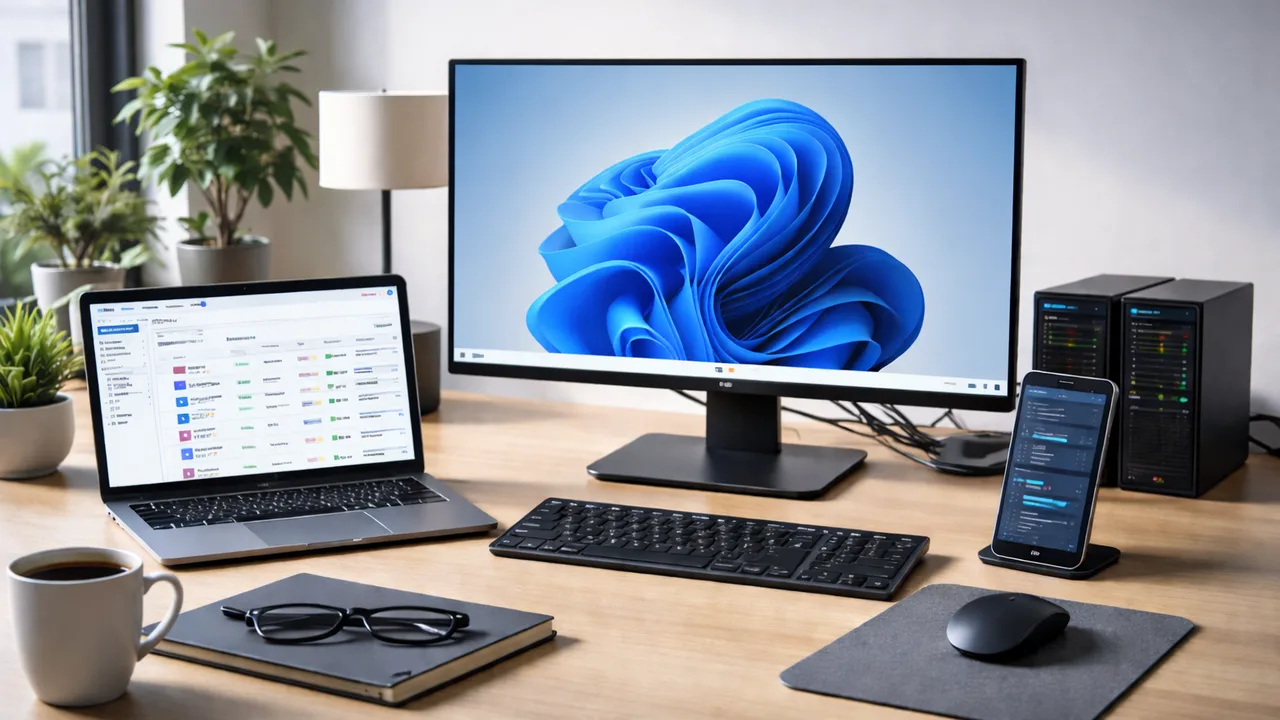
Endpoint management is important for businesses because it allows IT teams to secure, monitor, and control all devices from a central system. It reduces security risks, improves operational efficiency, and enables organizations to scale without increasing manual workload.
Why is endpoint management important for businesses?
Endpoint management is critical because businesses rely on multiple devices to run daily operations. Without centralized control, these devices become difficult to manage, secure, and maintain.
It ensures that all endpoints remain consistent, compliant, and operational.
How does endpoint management improve security?
Endpoint management strengthens security by enforcing policies across all devices.
It helps businesses:
- Apply security configurations consistently
- Detect threats and unusual activity
- Ensure devices are updated with the latest patches
- Control access to systems and data
Since endpoints are common entry points for attacks, managing them reduces overall risk.
How does endpoint management reduce operational workload?
Endpoint management reduces manual IT work through automation and centralized control.
It allows teams to:
- Deploy updates across all devices at once
- Automate routine maintenance tasks
- Manage systems remotely without physical access
- Standardize configurations across environments
This improves efficiency and frees up IT resources.
Why is endpoint management important for remote work?
With remote and distributed teams, endpoint management becomes essential.
It enables:
- Secure access to company systems from any location
- Remote monitoring and troubleshooting
- Consistent policy enforcement outside the office network
- Reduced reliance on on-site support
This ensures business continuity regardless of location.
How does endpoint management support compliance?
Many industries require strict security and data protection standards.
Endpoint management helps businesses:
- Enforce compliance policies across all devices
- Track system configurations and updates
- Generate logs and reports for audits
- Reduce the risk of non-compliance penalties
It provides the visibility needed to meet regulatory requirements.
How does endpoint management help businesses scale?
As businesses grow, the number of devices increases.
Endpoint management supports scaling by:
- Managing large numbers of devices from a single platform
- Applying policies in bulk instead of individually
- Automating repetitive tasks
- Maintaining consistency across all endpoints
This allows IT teams to support growth without proportional increases in effort.
How does endpoint management reduce downtime?
Proactive monitoring and automation help prevent issues before they impact operations.
It helps by:
- Detecting system issues early
- Automating fixes for common problems
- Ensuring devices stay updated and stable
- Allowing fast remote troubleshooting
This minimizes disruptions and improves reliability.
What risks do businesses face without endpoint management?
Without endpoint management, businesses may experience:
- Increased exposure to cyber threats
- Inconsistent system configurations
- Delayed updates and patching
- Higher IT workload and inefficiency
- Limited visibility into device status
These risks can lead to security incidents, downtime, and operational issues.
What types of businesses need endpoint management?
Endpoint management is valuable for:
- Small and mid-sized businesses managing multiple devices
- Enterprises with large IT environments
- Organizations with remote or hybrid workforces
- Managed service providers supporting multiple clients
Any business with connected devices benefits from centralized management.
FAQ
Is endpoint management only for large companies?
No, businesses of all sizes benefit from improved control, security, and efficiency.
Does endpoint management replace IT staff?
No, it supports IT teams by automating tasks and improving visibility.
Can endpoint management improve productivity?
Yes, by reducing downtime and manual work, it allows teams to focus on higher-value tasks.
Is endpoint management necessary for remote teams?
Yes, it is essential for managing and securing devices outside a centralized office environment.
Summary
Endpoint management is important for businesses because it provides centralized control, improves security, reduces manual workload, and supports scalable IT operations. It ensures that devices remain secure, compliant, and operational in both local and remote environments.
Sources
- Microsoft Learn, Importance of endpoint management in IT environments
- IBM, Benefits of endpoint management for organizations
- Cisco, Endpoint security and business impact