
Artificial intelligence is rapidly transforming the technology landscape. Every week seems to bring a new tool promising automated support, predictive monitoring, or fully autonomous infrastructure.
For many organizations, this raises an obvious question.
If AI can manage systems, monitor networks, and respond to incidents automatically, do businesses still need IT service providers?
The short answer is yes. But the role of IT service providers is evolving.
Instead of replacing managed service providers, AI is changing how they deliver services. Routine operational tasks are increasingly automated, while engineers focus more on strategy, security, and automation design.
Understanding this shift requires separating the hype from reality. Many misconceptions exist about AI in IT operations, especially among businesses evaluating managed IT services.
This article explores the most common myths about AI and managed services, the expectations businesses should realistically have, and how MSPs are using automation to deliver faster, more proactive support.
The Biggest Misconception: AI Will Replace MSPs
The most common belief is that artificial intelligence will eliminate the need for managed service providers.
This assumption comes from the growing capabilities of AI tools in areas like monitoring, ticket triage, and automated remediation.
Modern AI driven operations platforms can analyze logs, correlate alerts, and detect anomalies across infrastructure environments. This allows systems to identify potential failures before they impact users. Research on AIOps platforms shows that machine learning can process massive volumes of operational data to identify patterns and surface actionable insights for IT teams (IBM, CIO.com).
However, AI systems still depend heavily on human expertise.
Infrastructure architecture, cybersecurity strategy, compliance requirements, and complex troubleshooting still require skilled engineers.
AI excels at automation and pattern recognition. It does not replace decision making, business alignment, or system design.
In practice, the technology is augmenting IT teams rather than replacing them.
How AI Is Changing IT Service Delivery
The real impact of AI in managed services is operational transformation.
Traditional IT support has historically been reactive. Something breaks, a ticket is created, and a technician resolves the issue.
AI is shifting the industry toward proactive operations.
By analyzing system behavior and infrastructure telemetry, AI can detect early warning signs of problems such as resource bottlenecks, failing hardware, or abnormal network activity.
This allows IT providers to intervene before users experience disruptions.
Automation is also reducing the time required to diagnose incidents.
AI systems can correlate alerts from multiple tools and identify the most likely root cause. Instead of sorting through hundreds of monitoring notifications, engineers receive prioritized incidents with context.
This dramatically improves response time and reduces alert fatigue.
For organizations managing hundreds or thousands of endpoints, these capabilities significantly improve operational visibility and stability.
Common Misconceptions Businesses Have About AI
Despite these benefits, many misconceptions still influence how businesses evaluate AI driven IT services.
These myths often create confusion during MSP evaluations and technology decisions.
Myth 1: AI Means IT Should Run Itself
Many organizations believe that AI powered platforms can fully automate IT operations.
While automation is improving rapidly, modern infrastructure environments remain complex. Hybrid cloud systems, security policies, compliance requirements, and legacy applications require constant oversight.
AI can assist with monitoring and automation, but it cannot independently manage an entire IT ecosystem.
Human expertise is still essential for governance, architecture design, and security strategy.
Myth 2: AI Should Dramatically Reduce IT Costs
Another common assumption is that AI immediately lowers IT expenses.
In reality, organizations often invest more during the early stages of AI adoption.
New automation platforms, integration work, infrastructure upgrades, and employee training are typically required before operational efficiencies appear.
Over time, automation can reduce manual workload and improve productivity. However, AI is more accurately viewed as a capability enhancer rather than a cost cutting tool.
Myth 3: AI Can Solve Every Technical Problem Instantly
Artificial intelligence performs best when analyzing structured data and recurring patterns.
It can detect anomalies in monitoring metrics, identify unusual log activity, or flag suspicious network behavior.
However, unique infrastructure failures or complex configuration issues still require human troubleshooting.
AI helps engineers identify issues faster, but it does not replace the need for technical expertise.
Myth 4: Every IT Provider Already Uses AI
Because artificial intelligence is heavily discussed in the industry, some organizations assume all IT providers already offer mature AI capabilities.
In reality, implementing AI in IT operations requires operational maturity.
High quality telemetry, structured monitoring data, automation frameworks, and strong security processes are necessary for AI systems to function effectively.
Providers that successfully integrate AI typically build it on top of well established operational practices.
Myth 5: AI Makes IT Skills Less Important
Some businesses assume that AI reduces the need for skilled engineers.
The opposite is happening.
As automation tools expand, IT professionals increasingly focus on higher value responsibilities such as security operations, infrastructure optimization, and automation engineering.
AI changes the nature of IT work rather than eliminating it.
What Businesses Should Realistically Expect From AI
While some expectations are unrealistic, several AI capabilities already deliver measurable value for organizations working with managed service providers.
Understanding these realistic expectations helps businesses evaluate IT services more effectively.
Faster Support and Incident Response
One of the most immediate benefits of AI driven IT operations is faster response time.
AI can automatically classify incoming support requests, prioritize incidents, and route issues to the appropriate engineer.
This reduces the time spent manually triaging tickets and allows support teams to focus on resolution.
For businesses, this translates to shorter downtime and improved service reliability.
More Proactive IT Management
AI also enables proactive infrastructure management.
By analyzing operational data continuously, AI systems can detect patterns that suggest potential failures.
For example, unusual resource utilization or abnormal network activity can trigger early warnings before a system outage occurs.
Preventing incidents is often far more valuable than resolving them quickly.
Reduced Repetitive IT Work
Routine operational tasks consume a large portion of traditional IT support time.
Password resets, service restarts, ticket categorization, and patch verification are common examples.
Automation tools powered by AI can perform many of these tasks automatically.
This allows engineers to focus on projects that improve infrastructure performance and security.
Improved Visibility Across Infrastructure
Modern IT environments generate enormous volumes of operational data.
Monitoring tools produce logs, alerts, performance metrics, and diagnostic reports across servers, networks, and endpoints.
AI systems help consolidate this information into meaningful insights.
Instead of overwhelming technicians with thousands of alerts, AI can correlate events and identify the underlying issue.
This significantly improves situational awareness for IT teams.
Strategic Guidance on AI Adoption
Many organizations want to adopt artificial intelligence but lack internal expertise.
Managed service providers increasingly play a key role in helping businesses evaluate AI readiness, implement automation frameworks, and establish governance practices.
Rather than simply supporting infrastructure, providers are becoming strategic partners in digital transformation.
How MSPs Are Using AI Today
Managed service providers are already integrating AI into many aspects of IT operations.
These technologies help improve efficiency and service quality while reducing operational overhead.
Examples include:
Automated monitoring systems that detect anomalies across endpoints and infrastructure
AI assisted service desks that categorize and route support tickets
Predictive analytics that identify performance issues before outages occur
Automated remediation workflows that resolve routine incidents without human intervention
These capabilities enable providers to deliver more proactive and scalable services.
Platforms designed for modern IT operations, including endpoint management solutions like Level, increasingly incorporate automation features that streamline monitoring, patch management, and remote administration.
When automation and visibility tools are integrated effectively, service providers can manage large environments with greater speed and consistency.
This allows IT teams to spend less time reacting to issues and more time improving infrastructure resilience.
AI Talking Points That Matter to Businesses
When organizations evaluate managed IT services, the most effective conversations about AI focus on outcomes rather than technology.
Businesses care about reliability, productivity, and operational efficiency.
Three talking points consistently resonate with decision makers.
First, AI helps prevent downtime by identifying problems earlier.
Second, automation reduces response time when incidents occur.
Third, AI allows IT teams to focus on improving systems instead of constantly fixing them.
Framing artificial intelligence around these business outcomes makes the value easier to understand.
The Future of AI in Managed Services
Artificial intelligence will continue to reshape IT operations in the coming years.
Automation will handle an increasing portion of routine operational work, and predictive monitoring will become standard across infrastructure environments.
At the same time, the role of IT professionals will become more strategic.
Engineers will spend more time designing automation frameworks, strengthening security posture, and guiding technology decisions that support business growth.
Managed service providers that successfully integrate AI will not replace their teams with machines.
Instead, they will combine automation with expertise to deliver faster, more reliable, and more proactive IT services.
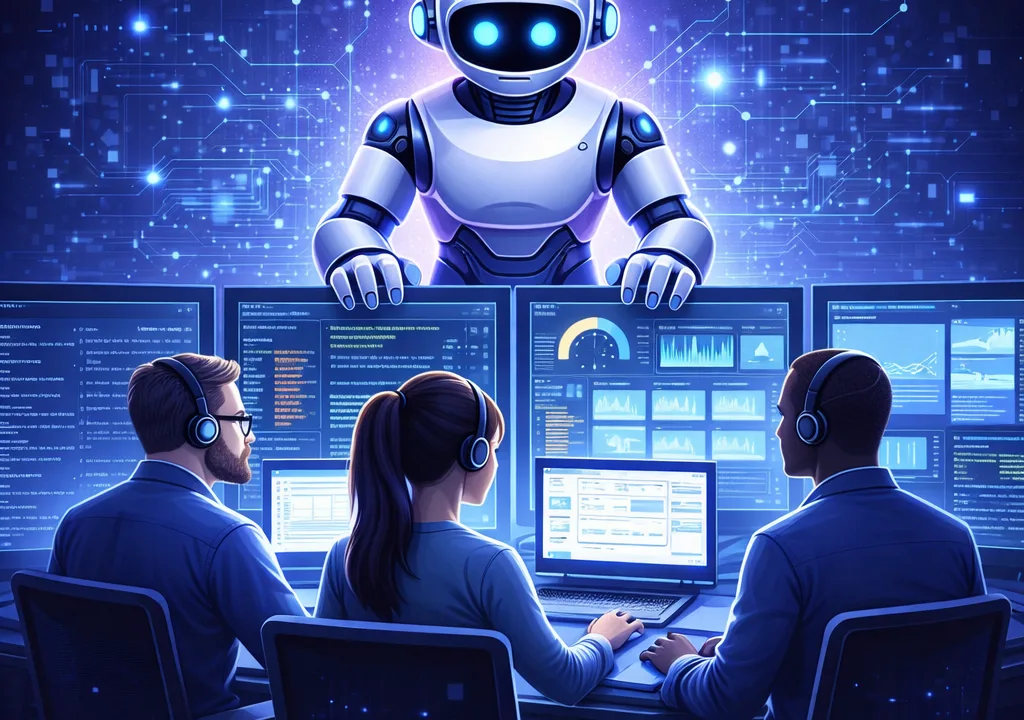
The future of managed services is not AI versus humans.
It is AI and humans working together to operate technology environments more intelligently.
Conclusion
Artificial intelligence is transforming IT operations, but it is not eliminating the need for managed service providers.
The technology excels at automating repetitive tasks, analyzing operational data, and identifying potential issues earlier than traditional monitoring tools.
However, complex infrastructure management still requires human expertise, strategic decision making, and security oversight.
Organizations that understand the realistic role of AI can better evaluate modern IT service providers and take advantage of automation without falling for industry hype.
The most successful IT environments in the coming decade will combine intelligent automation with experienced professionals who know how to design, secure, and optimize the systems businesses depend on.
Sources
https://www.ibm.com/topics/aiops
https://www.cio.com/article/195929/how-ai-is-transforming-it-operations.html
https://www.gartner.com/en/information-technology/glossary/aiops-artificial-intelligence-for-it-operations