
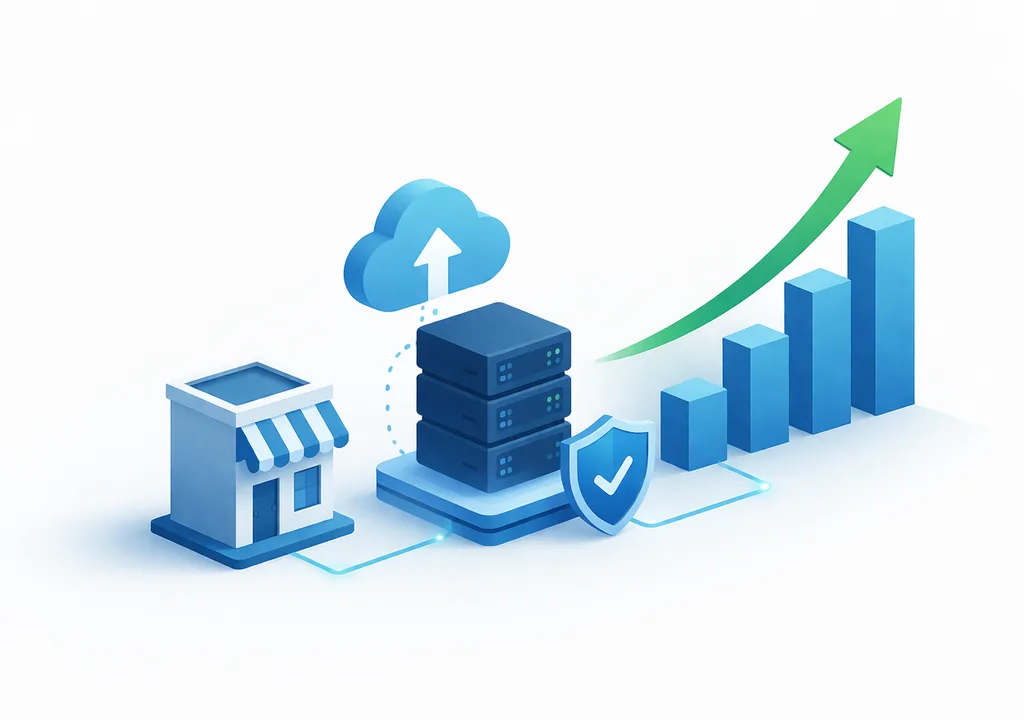
Small and mid-sized businesses depend on technology to run nearly every part of their operations. Email systems, internal applications, collaboration platforms, financial software, and customer management tools all rely on stable IT infrastructure. When that infrastructure is poorly designed, growth often exposes weaknesses that lead to downtime, security gaps, and operational inefficiencies.
Many SMB environments begin as small setups built quickly to support a limited team. A single server, basic networking hardware, and a few software tools may work well when a company has ten employees. As the organization grows to fifty or one hundred people, that same design begins to show its limits. Systems slow down, device management becomes complicated, and security risks increase.
Designing infrastructure with growth and reliability in mind allows businesses to expand without constantly rebuilding their technology foundation. A strong infrastructure strategy focuses on scalability, redundancy, security, and operational visibility. When these principles are built into the environment early, companies can grow with fewer disruptions.
Why Infrastructure Design Matters for SMBs
Infrastructure is the backbone of modern business operations. Nearly every process, from internal communication to customer service, depends on reliable digital systems. When infrastructure fails, productivity drops immediately and customer experiences suffer.
Poor infrastructure design often leads to common problems such as:
- frequent downtime or outages
- slow systems and network congestion
- limited ability to support remote workers
- security vulnerabilities
- difficulty managing large numbers of devices
As companies grow, these issues become more severe. Systems designed only for current workloads struggle to support new employees, additional applications, and larger volumes of data.
Scalable infrastructure allows organizations to increase capacity without replacing entire systems. Instead of rebuilding the environment every few years, businesses can add resources gradually as demand increases. This approach reduces long-term costs and keeps operations stable during periods of growth.
Core Principles of Reliable SMB Infrastructure
Designing infrastructure for growth and reliability requires several foundational principles. Each one contributes to building an environment that can scale smoothly while maintaining operational stability.
Scalability
Scalability ensures that systems can support increasing workloads without requiring major redesigns. Businesses grow by adding employees, customers, applications, and data. Infrastructure must grow with them.
Scalable infrastructure typically includes:
- cloud storage that expands as data grows
- virtualized servers that can add compute resources
- modular networking equipment that supports additional devices
Cloud computing plays a major role in scalability because organizations can increase processing power or storage capacity when needed. Analysts report that global cloud adoption continues rising rapidly as companies move more workloads to cloud platforms.
Instead of purchasing hardware sized for maximum demand, businesses can scale resources gradually while controlling costs.
Reliability and Redundancy
Hardware failures, power outages, and network disruptions eventually occur in every IT environment. Reliable infrastructure anticipates these failures and includes safeguards to keep systems running.
Common redundancy strategies include:
- multiple internet connections from different providers
- replicated storage systems
- failover servers or cloud backups
- uninterruptible power supplies for critical systems
High availability design ensures that if one component fails, another system can take over immediately. Research from IBM highlights that redundancy and failover capabilities are among the most effective ways to improve system uptime.
For SMBs that depend heavily on digital operations, even brief outages can disrupt productivity and revenue.
Security by Design
Cybersecurity has become one of the most important considerations in infrastructure design, especially for SMB cybersecurity where limited resources increase exposure to threats. Small and mid-sized businesses are increasingly targeted by cybercriminals because they often have fewer security resources than large enterprises.
Strong infrastructure security includes several layers:
- network firewalls and intrusion detection
- endpoint protection software
- multi factor authentication
- strict identity and access management
- regular patching and vulnerability monitoring
Security frameworks such as the NIST Cybersecurity Framework emphasize building protection directly into infrastructure rather than adding it later.
Organizations that design systems with security in mind are better prepared to prevent breaches and respond quickly when threats appear.
Centralized Endpoint Management
Modern businesses operate dozens or hundreds of endpoints. These include laptops, desktops, mobile devices, and sometimes specialized equipment or Internet of Things devices.
Managing these devices individually quickly becomes impractical. Centralized endpoint management allows IT teams to monitor device health, enforce security policies, and deploy updates across the entire environment.
Key capabilities include:
- automated patch management
- remote monitoring of device performance
- centralized configuration policies
- remote troubleshooting and support
Platforms designed for endpoint monitoring and automation simplify this process. For example, solutions such as Level provide visibility across distributed devices while helping IT teams automate maintenance tasks and monitor system health.
This centralized approach allows smaller IT teams to manage large environments more efficiently.
Monitoring and Observability
Infrastructure reliability depends heavily on visibility. Monitoring systems track performance metrics across servers, networks, and applications in real time.
Monitoring tools typically measure:
- server CPU and memory usage
- network performance and latency
- storage capacity and throughput
- endpoint health and connectivity
Alerts notify administrators when systems approach critical thresholds. This allows teams to address problems early before they escalate into outages.
Advanced monitoring platforms also use machine learning to detect unusual patterns that may signal hardware failures or security incidents.
Data Protection and Backup
Businesses generate large amounts of valuable data every day. Losing this information can halt operations and create legal risks.
Reliable infrastructure includes strong backup and recovery strategies. Many organizations follow the widely recommended three two one rule:
- three copies of important data
- two different storage formats
- one offsite backup location
Regular backup testing is equally important. A backup system only protects the business if data can be restored successfully during an emergency.
Major Challenges SMBs Face
Designing reliable infrastructure becomes more complex as organizations grow. Several challenges commonly affect SMB IT environments.
One major challenge is cybersecurity risk. Reports such as the Verizon Data Breach Investigations Report consistently show that small businesses experience a large number of ransomware and credential theft attacks.
Another challenge is the rapid growth of endpoints. Remote work and mobile devices mean employees access systems from many locations, increasing the number of devices that must be monitored and secured.
Cloud adoption also introduces complexity. While cloud platforms offer scalability, organizations must manage multiple services, monitor costs, and ensure proper security configurations.
Many SMBs also face limited IT staffing. Small teams must manage infrastructure maintenance, security, and user support simultaneously. Automation and centralized management tools help address this challenge by reducing repetitive manual work.
Common Infrastructure Mistakes SMBs Make
Several mistakes repeatedly appear in SMB infrastructure environments.
One of the most common is building systems only for current needs. Infrastructure designed for today’s workloads may fail quickly as the business grows.
Another mistake is relying on single points of failure. Environments that depend on one internet connection, one server, or one storage system are vulnerable to outages.
Tool sprawl also creates problems. Many organizations accumulate separate monitoring tools, security platforms, and management dashboards that do not integrate well. This fragmentation makes troubleshooting slower and increases operational complexity.
Finally, poor documentation can create serious risks. Without network diagrams and system inventories, resolving technical issues becomes more difficult and time consuming.
Building a Modern SMB Infrastructure Stack
Modern SMB infrastructure typically includes several integrated layers.
Networking forms the foundation, providing reliable connectivity between devices, cloud services, and business applications.
Cloud platforms provide scalable compute and storage resources. Many organizations operate hybrid environments that combine cloud services with on-prem infrastructure.
Security systems protect networks, endpoints, and user identities. This layer includes firewalls, endpoint protection, and access management tools.
Monitoring platforms track infrastructure health and detect issues early. Centralized monitoring helps teams maintain visibility across complex environments.
Endpoint management platforms simplify device administration by automating updates, enforcing policies, and providing remote management capabilities.
Together, these layers create a cohesive infrastructure ecosystem capable of supporting business growth.
Preparing Infrastructure for Future Growth
Technology environments will continue evolving as businesses adopt artificial intelligence tools, process larger data volumes, and support distributed workforces.
Infrastructure strategies should therefore emphasize flexibility. Systems designed with modular architecture and scalable platforms adapt more easily to new requirements.
Automation will also play an increasing role in infrastructure management. Automated provisioning, monitoring, and remediation reduce manual workloads and help small teams maintain larger environments.
Organizations that invest in scalable infrastructure today position themselves for smoother growth in the future.
Final Thoughts
For SMBs, infrastructure reliability directly affects productivity, security, and customer experience. Systems that fail frequently or cannot scale effectively create operational disruptions that slow business growth.
Designing infrastructure around scalability, redundancy, security, and centralized management creates a strong foundation for long-term success.
Businesses that implement these principles gain the ability to expand operations, support distributed teams, and protect critical data without constantly rebuilding their technology environment.
As digital operations continue becoming more central to business success, reliable infrastructure will remain one of the most important investments SMBs can make.
Sources
https://www.ibm.com/topics/high-availability
https://aws.amazon.com/architecture/well-architected/
https://www.nist.gov/cyberframework
https://www.verizon.com/business/resources/reports/dbir/
https://www.statista.com/statistics/871513/worldwide-data-created/