
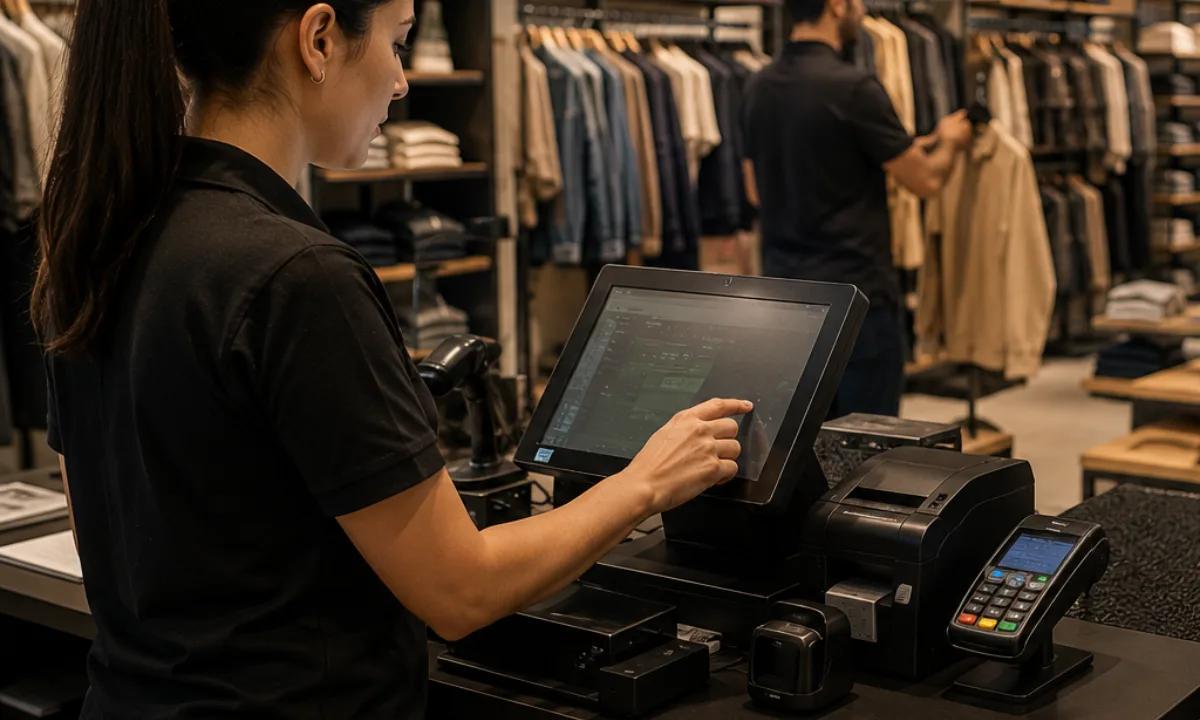
Retail IT infrastructure management is the practice of planning, maintaining, securing, and optimizing the technology that supports daily retail operations. It encompasses everything from point-of-sale (POS) systems and store networks to endpoints, inventory systems, cloud services, payment infrastructure, and warehouse technologies.
Modern retailers depend on technology to deliver seamless customer experiences, manage inventory accurately, process payments securely, and keep stores running efficiently. As businesses expand across multiple locations and digital channels, managing IT infrastructure becomes more complex. Adopting established frameworks and best practices helps improve reliability, strengthen cybersecurity, support business continuity, and simplify day-to-day operations.
What Is Included in Retail IT Infrastructure?
Retail IT infrastructure consists of the hardware, software, networks, and services that enable stores and supporting operations to function effectively.
Common components include:
- POS terminals
- Self-checkout kiosks
- Store and warehouse networks
- Wireless access points
- Employee workstations and laptops
- Mobile devices and handheld barcode scanners
- Inventory management systems
- Digital signage
- Security cameras
- Cloud-based business applications
- Storage systems and backups
Because these technologies are often distributed across multiple locations, maintaining consistent configurations and security controls is essential.
The NIST Cybersecurity Framework 2.0 recommends organizations establish governance, identify critical assets, protect systems, detect cybersecurity events, respond effectively, and recover from incidents. These functions provide a strong foundation for managing retail technology environments.
Why Retail IT Infrastructure Management Matters
Retail operations rely on technology at nearly every customer touchpoint. A network outage, storage failure, or security incident can interrupt payment processing, delay inventory updates, affect order fulfillment, or reduce employee productivity.
Effective retail IT infrastructure management helps organizations:
- Improve system availability
- Protect payment and customer data
- Standardize technology across locations
- Reduce operational risk
- Support business continuity
- Simplify ongoing maintenance
Rather than reacting to problems after they occur, retailers benefit from structured processes that improve visibility, consistency, and resilience.
Core Areas of Retail IT Infrastructure Management
Network Infrastructure
Reliable networking connects stores, warehouses, headquarters, cloud services, and payment processors. Stable connectivity supports inventory synchronization, customer transactions, communications, and operational reporting.
Consistent network configurations, documented infrastructure, and ongoing monitoring contribute to more reliable operations across distributed retail environments.
Endpoint Management
Retail environments often include hundreds or thousands of connected devices, including POS terminals, computers, tablets, handheld scanners, and mobile devices.
According to the CIS Critical Security Controls v8.1, maintaining an accurate inventory of enterprise assets is a foundational security practice because organizations must first know what systems they manage before they can adequately protect them.
Payment Infrastructure
Payment systems require additional safeguards because they process cardholder information.
The PCI DSS v4.0.1 standard establishes security requirements for protecting payment environments through secure configurations, authentication, access control, encryption, vulnerability management, logging, and continuous security processes.
Storage and Data Protection
Retail organizations generate significant volumes of operational and customer information, including transaction records, inventory data, sales reporting, and business analytics.
NIST SP 800-209 provides guidance for securing storage infrastructure through appropriate access controls, monitoring, resilient architectures, and data protection practices.
Common Retail IT Infrastructure Challenges
Managing Distributed Locations
Every store operates as a remote technology environment with its own devices, users, and network infrastructure. As retailers expand, maintaining consistent configurations and operational practices across locations can become increasingly challenging.
Supporting Legacy Systems
Many retailers continue using specialized POS software or legacy business applications that cannot immediately be replaced. These systems often require additional planning to maintain compatibility while reducing operational and security risks.
Protecting Against Cybersecurity Threats
Retail organizations remain attractive targets because they process payment information and maintain valuable business and customer data.
The Cybersecurity and Infrastructure Security Agency (CISA) recommends implementing layered security, strong authentication, timely software updates, employee awareness training, and continuous monitoring to strengthen organizational cybersecurity.
Managing Third-Party Risk
Retail businesses frequently depend on payment processors, cloud providers, logistics companies, software vendors, and technology suppliers.
NIST SP 800-161 Rev. 1 emphasizes incorporating cybersecurity risk management throughout the technology supply chain, including supplier evaluation, procurement, and ongoing risk assessment.
Retail IT Infrastructure Best Practices
Maintain Accurate Asset Inventories
Every connected device should be identified, documented, and reviewed regularly. Maintaining visibility across hardware and software helps improve operational management while supporting cybersecurity efforts.
Establish Structured Patch Management
Keeping operating systems, firmware, applications, and network devices updated helps reduce known vulnerabilities.
NIST SP 800-40 Rev. 4 recommends developing an enterprise patch management program that prioritizes risk, tests updates appropriately, and deploys security patches in a structured manner.
Apply Zero Trust Principles
Retail technology environments increasingly include cloud services, remote employees, contractors, and third-party integrations.
NIST SP 800-207 describes Zero Trust Architecture as an approach that continuously verifies users, devices, and workloads instead of relying solely on traditional network boundaries.
Standardize Security Controls
Organizations benefit from applying consistent security controls across stores and supporting infrastructure.
NIST SP 800-53 Rev. 5 provides a comprehensive catalog of controls covering identity management, configuration management, system monitoring, access control, incident response, and system protection.
Prepare for Security Incidents
Even mature security programs should prepare for the possibility of cybersecurity incidents.
NIST SP 800-61 Rev. 3 recommends establishing documented incident response procedures, assigning responsibilities, exercising response plans, and continuously improving capabilities after incidents occur.
Governance and Operational Management
Successful retail IT infrastructure management depends on well-defined governance and service management processes in addition to technology.
The COBIT framework helps organizations align IT governance with business objectives while managing risk and measuring performance.
The ITIL Framework provides guidance for incident management, change management, problem management, service continuity, and continual service improvement, helping organizations deliver reliable IT services across multiple retail locations.
Organizations seeking a formal information security management system can align with ISO/IEC 27001:2022, while ISO 22301:2019 provides requirements for business continuity management systems that help organizations prepare for and recover from disruptive events.
Supporting the Retail Supply Chain
Retail infrastructure extends beyond physical stores.
Warehouses, suppliers, logistics providers, distributors, and inventory platforms all rely on interconnected technology systems.
The National Retail Federation's Retail Supply Chain Cybersecurity Risk Management Plan recommends identifying critical suppliers, evaluating cyber risks, establishing security expectations, and preparing coordinated response plans across the retail ecosystem.
Likewise, GS1 Standards support interoperability through standardized product identification, barcode systems, and data exchange, helping retailers maintain inventory visibility and improve supply chain consistency.
Retail IT Infrastructure Checklist
Organizations can strengthen retail IT infrastructure by following these established practices:
- Maintain a complete inventory of technology assets.
- Standardize configurations across retail locations.
- Apply software and firmware updates through a structured patch management process.
- Protect payment environments using PCI DSS requirements.
- Secure storage systems and protect business-critical data.
- Implement consistent security controls across infrastructure.
- Evaluate supplier and third-party cybersecurity risks.
- Document and regularly exercise incident response procedures.
- Develop and maintain business continuity plans.
- Review infrastructure governance and operational processes on a regular basis.
Frequently Asked Questions
What is retail IT infrastructure management?
Retail IT infrastructure management is the process of maintaining, securing, and optimizing the technology that supports retail operations, including networks, POS systems, endpoints, storage, cloud services, and supporting infrastructure.
Why is PCI DSS important for retailers?
PCI DSS establishes security requirements for organizations that process, store, or transmit payment card data, helping protect cardholder information and strengthen payment security.
What are the biggest retail IT infrastructure challenges?
Common challenges include managing distributed locations, maintaining legacy systems, protecting against cybersecurity threats, supporting payment environments, and managing risks associated with third-party vendors.
How does Zero Trust improve retail security?
Zero Trust continuously verifies users, devices, and workloads before granting access, reducing reliance on traditional network trust boundaries and strengthening security across distributed retail environments.
Which frameworks help improve retail IT infrastructure management?
Widely recognized frameworks include the NIST Cybersecurity Framework, NIST Special Publications, PCI DSS, ISO/IEC 27001, ISO 22301, CIS Critical Security Controls, COBIT, and ITIL.
Final Thoughts
Retail IT infrastructure management requires more than maintaining hardware. It involves coordinating networks, endpoints, payment systems, storage, cybersecurity, governance, business continuity, and supplier relationships across an increasingly connected retail ecosystem.
By following established guidance from organizations including NIST, CISA, PCI SSC, ISO, CIS, ISACA, ITIL, the National Retail Federation, and GS1, retailers can build secure, resilient, and scalable technology environments that support reliable operations and better customer experiences.